
Potholes rarely stay small, so choosing the right repair matters. In the cold patch vs infrared repair debate, the better choice depends on the pavement condition, the weather, the urgency, and whether the goal is a quick fix or a lasting result.
What Is the Main Difference?
Cold patch fills a hole with a ready-to-use asphalt mix that does not need to be heated. Infrared repair heats the existing pavement, loosens the damaged asphalt, blends in fresh material, and compacts the area into a smooth patch.
That difference affects nearly every part of the job. Cold patch is easy to store and place, even when an asphalt plant is closed. Infrared work needs trained operators and special equipment, but it can form a strong bond between the repaired area and the pavement around it.
Neither method is right for every pothole. A cold patch may be the sensible answer during a storm or urgent safety call. Infrared repair often makes more sense for a commercial parking lot that needs a clean, durable repair with little downtime.
What Is Cold Patch Asphalt?

Cold patch is a blended asphalt repair material sold in bags, buckets, or bulk. Unlike hot mix asphalt, it stays workable without being kept at paving temperature. A crew can carry it on a truck and use it when a pothole needs prompt attention.
Application can be simple. Loose water and debris are removed when conditions allow, material is placed in the hole, and the patch is compacted. Some emergency jobs use a basic throw-and-roll process, while better-prepared repairs include more cleaning, shaping, and careful compaction.
Cold patch is often viewed as temporary, but products and installation quality vary. A premium mix in a well-prepared hole can perform far better than loose material dropped into standing water. Even so, the patch does not fuse with the surrounding asphalt in the same way as a properly completed infrared repair.
Common Uses for Cold Patch
Cold patch earns its place because it solves urgent problems with little setup. Property managers and road crews often use it for:
- Emergency pothole filling
- Winter repairs when hot mix is unavailable
- Small, isolated holes
- Short-term hazard control
- Low-traffic areas
- Temporary repairs before a planned pavement project
It can also help when a permanent repair cannot be scheduled at once. Filling the hole may reduce the immediate risk to drivers and pedestrians while the owner arranges a more complete repair.
What Is Infrared Asphalt Repair?

Infrared asphalt repair uses a heater to warm the damaged pavement without direct flame. Once the asphalt becomes soft and workable, the crew rakes the repair area, removes failed material as needed, adds a rejuvenator or fresh hot mix, and compacts the surface.
The heated edges blend with the repair material. This creates a thermal bond instead of leaving the distinct cold joint commonly found around other patches. With fewer open seams, water has fewer easy paths into the repaired area.
The process also reuses much of the asphalt already in place. Less old material may need to be hauled away, and less new mix is often required. A typical isolated repair can be completed quickly, although heating time changes with pavement age, moisture, air temperature, mix design, and repair depth.
The Basic Infrared Repair Process
A professional infrared pothole repair commonly follows these steps:
- The crew inspects the damage and checks for signs of base failure.
- Dirt, loose stone, and standing water are cleared from the area.
- An infrared heating panel is placed over a space larger than the visible defect.
- The softened asphalt is raked and reshaped without disturbing the solid base.
- Failed material is removed, and new asphalt is added where needed.
- The repair is graded and compacted, with special care given to the edges.
- The finished surface is allowed to cool before normal traffic returns.
Good temperature control is important. Asphalt can be damaged if it is overheated, and wet pavement may heat unevenly. This is one reason infrared work should be handled by a crew that understands both the equipment and the pavement.
How the Two Methods Compare
The visible pothole tells only part of the story. Owners should compare how each repair handles time, traffic, moisture, and the condition beneath the surface.
Repair Speed
Cold patch is hard to beat when the main goal is immediate action. The material is ready to use, and a small pothole may be filled with basic tools. This makes it valuable for after-hours calls, bad weather, and sudden hazards.
Infrared repair requires equipment setup and controlled heating. Still, a trained crew can often finish a small repair in about 20 to 30 minutes. Because saw cutting and extensive removal are usually not needed, the work can cause less disruption than full-depth replacement.
Durability
Cold patch can loosen, settle, or pull away as traffic and weather work on it. Its service life depends on the product, hole preparation, compaction, drainage, traffic volume, and pavement condition. A rushed repair in a wet, ragged pothole is less likely to last.
Infrared repair usually provides a stronger, longer-lasting surface repair. Heating lets the old and new asphalt knit together, while compaction helps form a dense, smooth area. The lack of a hard cut seam can reduce common points where water enters and cracks begin.
Durability still depends on what lies below. If the aggregate base is weak or soaked, repairing only the asphalt surface will not correct the cause. The pavement may sink or break again, regardless of how well the top layer was repaired.
Weather and Seasonal Access
Cold patch can be used in a wider range of weather, which is one of its greatest strengths. It is often available during winter, when hot mix plants may be closed and pavement conditions are poor. Some cold mixes are designed for damp or cold holes, though a clean and stable repair area is still preferred.
Infrared equipment can extend the repair season because it supplies heat at the job site. However, heavy moisture, deep frost, or severe conditions can limit the quality of the repair. Water consumes heat as it evaporates and can prevent the area from heating evenly.
Appearance
A cold patch often remains easy to see. The color, texture, and edge may differ from the pavement around it, and the material can settle below grade if it is not placed and compacted well.
Infrared repair tends to produce a smoother, less noticeable finish. The softened pavement can be reshaped to meet the surrounding grade, and the blended edges avoid the sharp outline of a cut patch. The repaired spot will not be invisible, but it often looks cleaner and more uniform.
Material Use and Waste
Cold patch is convenient, but every hole requires new packaged or bulk material. Failed patches may also need to be removed and replaced more than once if the underlying issue is not addressed.
Infrared repair reworks usable pavement already on the ground. Crews add only the amount of fresh mix needed to restore grade and density. This can reduce hauling, disposal, and demand for new asphalt on suitable repairs.
Upfront Cost and Long-Term Value
Cold patch usually has the lower entry cost for a small emergency repair. There is no infrared machine to mobilize, and the work may require fewer specialized resources. For a temporary need, paying for more repair than the situation requires may not make sense.
Infrared repair may cost more at the start, especially for a single tiny pothole. Yet price per repair can improve when several damaged areas are completed during one visit. A longer service life may also mean fewer repeat calls, less staff time, and lower risk from a recurring hole.
Owners should compare total value, not only the first invoice. A cheap patch that fails several times can cost more than one sound repair. Site disruption, appearance, customer access, and liability exposure also belong in that calculation.
When Cold Patch Is the Better Choice
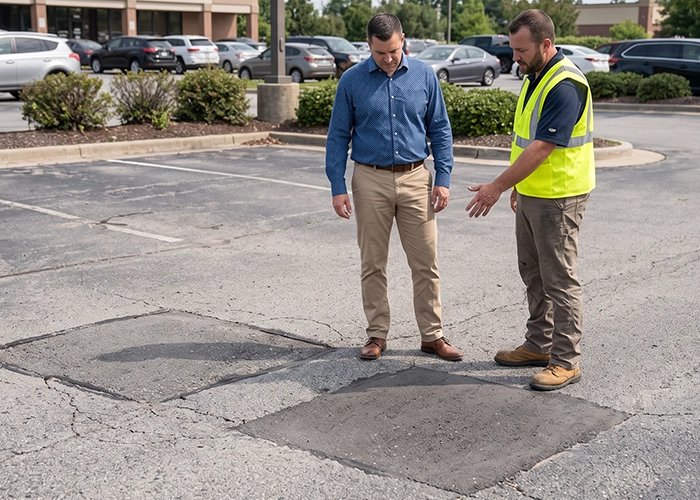
Cold patch is the practical option when speed and access matter more than finish or service life. A fresh pothole near a store entrance, for example, may need to be made safer before a permanent crew can arrive.
Choose cold patch when:
- The repair is an urgent safety measure.
- Weather prevents a more complete method.
- Hot mix and infrared equipment are unavailable.
- The pavement will soon be resurfaced or replaced.
- The area carries light traffic.
- The owner needs a short-term repair within a tight budget.
The word “temporary” does not mean careless. Removing loose debris, squaring unstable edges when appropriate, placing material in manageable lifts, and compacting it firmly can improve performance. The finished patch should stand slightly proud when the product instructions call for traffic to complete compaction.
When Infrared Repair Is the Better Choice
Infrared repair is often preferred when the pavement has surface damage but a stable base. It works well for potholes, shallow depressions, rough utility cuts, failed surface patches, and some areas where water collects because the grade is slightly off.
Choose infrared repair when:
- A longer-lasting repair is needed.
- The base beneath the pothole remains stable.
- The property must limit traffic interruption.
- A smoother, cleaner finish matters.
- Several nearby defects can be repaired in one visit.
- The owner wants to reuse existing asphalt and reduce waste.
Commercial parking lots are strong candidates because work can be completed in small zones. A crew may repair one area while much of the lot stays open. Once the patch has cooled enough, the space can often return to service without a long closure.
When Neither Method Is Enough

Some potholes are signs of deeper pavement failure. If the base has washed out, the asphalt moves under traffic, or water keeps rising through the surface, a top-layer repair will only hide the issue for a while.
Watch for warning signs such as:
- Repeated failure in the same spot
- Deep holes with soft or muddy material below
- Widespread alligator cracking
- Large sunken or heaved areas
- Moving pavement under vehicle loads
- Drainage problems that keep the area wet
These conditions may call for saw cutting, excavation, base repair, drainage correction, and full-depth asphalt replacement. Infrared heat generally works within the upper asphalt layer. It cannot rebuild an unstable foundation several inches below the surface.
What Property Owners Should Ask Before Scheduling Repairs

A good contractor should explain why a repair method fits the site. The answer should be based on pavement condition rather than a one-size-fits-all sales pitch.
Ask these questions before approving the work:
- Is the damage limited to the asphalt, or has the base failed?
- Is water entering from a crack, drain, slope, or underground source?
- Is the proposed work temporary or intended as a lasting repair?
- How will the hole be cleaned, prepared, and compacted?
- When can vehicles safely use the repaired area?
- Would grouping several repairs reduce the cost per location?
- Does the surrounding pavement have enough life left to justify the repair?
Photos can help with early planning, but they do not always show depth, movement, or moisture. An on-site inspection gives the contractor a better chance to identify the cause and recommend the right scope.
The Right Fix Starts Here
Infrared repair is usually the stronger choice for lasting surface repairs because it reuses sound asphalt, limits seams, and leaves a smoother finish, but deep structural damage still requires full-depth work..
Don’t let damage grow into a bigger problem. Contact Pothole Repair Carolinas today for a free assessment!
Related Articles:
- The Top Causes Of Potholes And How To Repair Them
- Asphalt Pothole Repair Myths: Fact vs Fiction
- 24 Hour Emergency Asphalt Repair: Fast Solutions to Protect Your Pavement