
Pavement problems rarely happen at a convenient time. A pothole, large crack, or broken section of asphalt can appear overnight after heavy traffic or severe weather, creating a safety hazard before the next business day begins. That’s why 24 hour emergency asphalt repair is an essential service for property owners who need quick, reliable solutions to keep their pavement safe and functional.
Why 24 Hour Emergency Asphalt Repair Matters
Whether you manage a commercial parking lot, industrial facility, apartment complex, or retail center, responding quickly to pavement damage helps reduce liability, minimize disruptions, and prevent small problems from becoming much more expensive repairs.
Not every crack or pothole requires immediate attention, but some pavement issues simply cannot wait. When asphalt damage creates a risk for drivers or pedestrians, every hour counts.
Emergency repairs help restore safe conditions while protecting the underlying pavement from additional deterioration. Water can quickly seep beneath damaged asphalt, weakening the base layer and causing surrounding sections to fail. What starts as a single pothole can spread into a much larger repair if left untreated.
Many businesses also operate outside traditional working hours. Distribution centers, hospitals, airports, manufacturing plants, and shopping centers often have traffic around the clock. Waiting several days for repairs may not be an option when customers, employees, or delivery vehicles rely on safe pavement every day.
Fast response also demonstrates that a property owner takes maintenance seriously. Well-maintained pavement leaves a positive impression while helping reduce the chances of vehicle damage or personal injury claims.
Common Situations That Require Emergency Asphalt Repairs

Some pavement damage develops slowly over time, while other problems appear with little warning. Understanding the difference helps property owners know when to call for immediate service.
Common emergency situations include:
- Large potholes in high-traffic areas
- Deep potholes can damage tires, suspension systems, and delivery vehicles.
- They also increase the risk of trips and falls for pedestrians.
- Sudden pavement collapse
- Sections of asphalt may sink because of erosion, utility failures, or a weakened base.
- These areas often become unsafe without immediate repair.
- Storm-related pavement damage
- Heavy rain, flooding, snow, and freeze-thaw cycles can rapidly worsen existing cracks.
- Water infiltration speeds up pavement failure.
- Construction or utility cuts
- Unexpected excavation work sometimes leaves uneven pavement surfaces.
- Temporary repairs help restore safe traffic flow until permanent work can be completed.
- Hazardous trip areas
- Broken pavement near entrances, sidewalks, loading docks, or ADA-accessible routes should be addressed as soon as possible.
While not every crack requires an emergency response, pavement hazards that affect safety should never be ignored.
What Causes Asphalt Emergencies?
Emergency pavement failures rarely happen because of one single issue. Instead, several factors usually work together over time before visible damage suddenly appears.
Water Is the Biggest Threat
Water remains the leading cause of asphalt deterioration. Once moisture enters cracks, it begins weakening the foundation beneath the surface.
As vehicles continue driving over the damaged area, the unsupported asphalt starts breaking apart. During colder months, freezing temperatures make the problem even worse as expanding ice widens existing cracks.
Without prompt repairs, damage spreads much faster than many property owners expect.
Heavy Traffic Speeds Up Wear
Commercial parking lots often experience constant traffic from delivery trucks, buses, garbage trucks, and heavy equipment.
These vehicles place significantly more stress on pavement than passenger cars. Areas where trucks stop, turn, or brake repeatedly tend to wear out faster.
Loading docks, entrances, dumpster enclosures, and drive lanes frequently become the first locations where emergency repairs are needed.
Aging Pavement Becomes More Vulnerable
Even quality asphalt has a limited lifespan.
Years of sunlight, temperature changes, vehicle traffic, and weather gradually reduce asphalt’s flexibility. As the pavement becomes brittle, cracks form more easily, allowing moisture to penetrate below the surface.
Routine maintenance extends pavement life, but aging asphalt eventually requires more extensive repairs if preventive work has been delayed.
How Emergency Asphalt Repair Services Respond Quickly
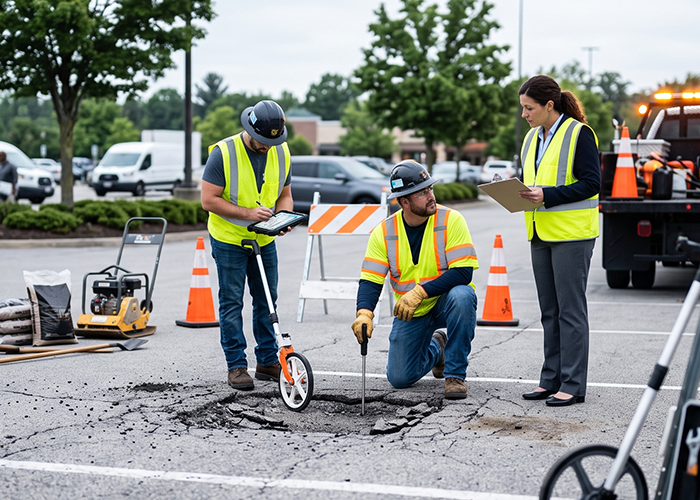
One advantage of professional emergency repair crews is their ability to assess the situation and begin work with minimal delay.
Instead of applying a temporary patch without understanding the underlying problem, experienced contractors first evaluate the damaged area. They determine whether the issue affects only the surface or extends into the pavement base.
Depending on the severity of the damage, repairs may include temporary stabilization, permanent pothole repair, infrared asphalt restoration, partial-depth patching, or full-depth replacement.
The repair method depends on factors such as:
- Size of the damaged area
- Depth of pavement failure
- Traffic volume
- Weather conditions
- Available repair materials
- Safety concerns surrounding the site
Choosing the correct repair method from the beginning helps avoid repeated failures and unnecessary costs.
Temporary Repairs vs. Permanent Repairs
Not every emergency repair permanently solves the problem on the first visit. Sometimes restoring immediate safety becomes the highest priority.
Temporary repairs are designed to stabilize damaged pavement until conditions allow for a more durable solution.
These repairs may involve:
- Cold patch asphalt
- Temporary traffic control
- Surface stabilization
- Filling dangerous voids
- Isolating damaged sections
Temporary repairs reduce immediate hazards while buying time for more comprehensive restoration.
Permanent repairs, on the other hand, address the underlying cause of pavement failure. Contractors may remove damaged asphalt, repair the foundation, install new hot mix asphalt, and compact the surface to create a longer-lasting repair.
Whenever possible, permanent repairs provide the greatest long-term value because they reduce the likelihood of recurring damage.
Infrared Asphalt Repair Plays an Important Role

One of the most effective methods used during many emergency situations is infrared asphalt repair.
Instead of cutting out large sections of pavement, infrared technology heats the existing asphalt until it becomes workable again. Fresh asphalt is blended into the heated material before the surface is compacted into a seamless repair.
This process offers several advantages:
- Repairs blend with existing pavement.
- Fewer seams reduce future water intrusion.
- Traffic disruption is minimized.
- Repairs can often be completed faster than traditional replacement.
- Material waste is significantly reduced.
Infrared repair works especially well for potholes, utility cuts, trip hazards, and localized pavement failures where the surrounding asphalt remains structurally sound.
When conditions are appropriate, this method helps restore pavement quickly while extending its overall service life.
Signs You Should Call Before Damage Gets Worse
Many emergency calls could have been avoided if warning signs had been addressed earlier. Small pavement issues often provide clear indications that larger failures are developing beneath the surface.
Watch for these warning signs:
- Cracks that continue growing after each season
- Potholes that reappear after previous repairs
- Standing water following rainstorms
- Loose gravel or crumbling asphalt
- Depressions where vehicles regularly travel
- Areas that feel uneven when walking or driving
- Drainage problems causing water to collect on the pavement
Addressing these issues early usually costs far less than waiting for a full pavement failure that requires emergency service.
How Emergency Asphalt Repair Helps Reduce Liability

Damaged pavement creates more than an inconvenience. It can expose property owners to unnecessary risks that may result in expensive repairs, insurance claims, or legal disputes.
A pothole in a busy parking lot or a raised section of asphalt near an entrance can quickly become a hazard. Drivers may experience vehicle damage, while pedestrians face an increased risk of slips, trips, and falls. Prompt repairs help reduce these risks by restoring a safer surface before someone gets hurt.
Emergency repairs also demonstrate that a property owner is taking reasonable steps to maintain the property. While no pavement stays perfect forever, responding quickly to dangerous conditions shows a commitment to safety.
For businesses, maintaining safe pavement also protects customer confidence. People notice when parking lots and driveways are clean, smooth, and well cared for. A neglected surface can leave visitors questioning how well the rest of the property is maintained.
What to Expect During an Emergency Asphalt Repair Visit
Knowing what happens during an emergency service call can help property owners prepare and minimize disruptions.
Although every project is different, most emergency asphalt repairs follow a similar process.
- Damage AssessmentThe repair crew inspects the damaged area to determine its size, depth, and likely cause. They also evaluate nearby pavement for signs of additional deterioration that may not be immediately visible.
- Site PreparationBefore repairs begin, the work area is secured to protect pedestrians and vehicles. Traffic may be redirected while crews remove loose debris, standing water, or damaged asphalt.
- Repair SelectionThe contractor chooses the most effective repair method based on pavement conditions, weather, traffic levels, and how quickly the area needs to reopen.
- Repair CompletionWhether using infrared technology, hot mix asphalt, or another repair method, the damaged section is restored and compacted to create a stable surface.
- Final InspectionOnce repairs are complete, the crew checks the finished work to ensure the pavement is safe, level, and ready for normal use.
Many emergency repairs can be completed in just a few hours, allowing businesses to resume normal operations with minimal downtime.
Choosing the Right Emergency Asphalt Repair Contractor

Not every paving company is equipped to respond to emergency situations. Fast response times and quality workmanship are equally important when pavement damage affects safety.
When comparing contractors, look for a company that offers:
- True 24-hour emergency response
- Experience with commercial and municipal pavement
- Multiple repair options, including infrared asphalt repair
- Proper equipment for different repair situations
- Licensed and insured crews
- Clear communication throughout the project
- A focus on long-term pavement performance, not just temporary fixes
It’s also helpful to establish a relationship with a trusted contractor before an emergency happens. Knowing who to call can save valuable time when unexpected pavement damage occurs.
Preventive Maintenance Is Still the Best Investment
Emergency repairs are valuable when unexpected problems arise, but they should not replace routine pavement maintenance.
Regular inspections allow small issues to be corrected before they develop into major failures. Crack sealing, sealcoating, pothole repairs, and drainage improvements all help extend the life of asphalt while reducing the likelihood of emergency situations.
A proactive maintenance plan offers several benefits:
- Extends pavement life
- Reduces repair costs over time
- Improves curb appeal
- Enhances pedestrian and vehicle safety
- Minimizes business disruptions
- Helps preserve property value
Think of emergency repairs as a safety net rather than a maintenance strategy. The best results come from combining rapid response with consistent preventive care.
Industries That Benefit Most From Emergency Asphalt Repair
Almost any property with asphalt pavement can experience unexpected damage, but some industries rely more heavily on emergency repair services because of their constant traffic and operational demands.
Common examples include:
- Shopping centers and retail plazas
- Office complexes
- Apartment communities
- Hospitals and medical facilities
- Schools and universities
- Hotels and resorts
- Distribution centers
- Manufacturing facilities
- Municipal streets and public parking lots
- Airports and transportation hubs
For these properties, even a single pothole or damaged drive lane can disrupt daily operations. Quick repairs help keep traffic moving while protecting visitors and employees.
Weather Can Change Pavement Conditions Overnight
One of the biggest reasons emergency asphalt repair services remain in demand is the unpredictable nature of weather.
Heavy rainfall can wash away weakened base material beneath the pavement. During winter, repeated freeze-thaw cycles force water to expand inside cracks, causing asphalt to break apart faster. In warmer climates, prolonged heat softens pavement, making it more vulnerable to heavy vehicle loads.
Storms can also introduce debris, flooding, and drainage issues that place additional stress on already aging pavement.
Because weather-related damage can develop quickly, routine inspections after major storms are a smart investment. Identifying new cracks or potholes early often prevents more extensive repairs later.
Why Fast Repairs Save Money
Some property owners delay repairs because the damage appears minor at first glance. Unfortunately, asphalt rarely repairs itself.
Small cracks allow water to reach the pavement base. As traffic continues, those cracks grow wider, eventually leading to potholes, edge failures, and larger structural problems.
Repairing a localized pothole is typically far less expensive than replacing an entire section of pavement. Acting quickly also helps avoid indirect costs, such as vehicle damage claims, business interruptions, or emergency closures.
Viewed over the life of a parking lot or roadway, timely repairs are one of the most cost-effective ways to protect an asphalt investment.
Keep Your Pavement Ready for Whatever Comes Next
Pavement damage doesn’t follow a schedule, but your response can make all the difference. Whether it’s a newly formed pothole, storm damage, or a failing section of asphalt, addressing the problem quickly helps protect people, preserve your pavement, and reduce future repair costs.
Pavement problems don’t have to bring your business to a stop. Pothole Repair Carolinas is ready to respond with fast, dependable asphalt repair solutions that restore safety and minimize downtime. Call us at 704-227-0468 or contact us online to get started!
Related Articles:
- Professional Puddle Repair: What Property Owners Need to Know
- How Weather Affects Potholes: Things to Look Out For
- Asphalt Vs Concrete: Uses, Maintenance, And Costs