
Potholes have a way of turning a normal drive into a daily annoyance, and the advice that follows can get loud and confusing fast. This guide cuts through the pothole repair myths you hear most often, so repairs in your community streets and parking areas hold up longer. A little clarity now can save a lot of repeat patching later.
Pothole Repair Myths: Where They Come From
A pothole shows up overnight, pressure rises, and a quick fix starts to sound like the smart fix. That urgency is how half-truths spread, especially when one patch “looks fine” for a week and gets called a success. Over time, those stories turn into rules that get repeated, and pothole repair myths start to sound like pavement law.
Property managers and boards often inherit these habits from the last crew, the last winter, or the last budget cycle. Plenty of pothole repair misconceptions start with good intentions, then stick around long after the pavement has changed. New traffic patterns, heavier delivery vehicles, and aging asphalt can make yesterday’s routine fall short.
A better approach starts with one idea: a pothole is a symptom, not a personality flaw in the pavement. The surface hole matters, yet the conditions under it matter just as much. That mindset makes the myths easier to spot.
Myth: Cold Patch is Permanent
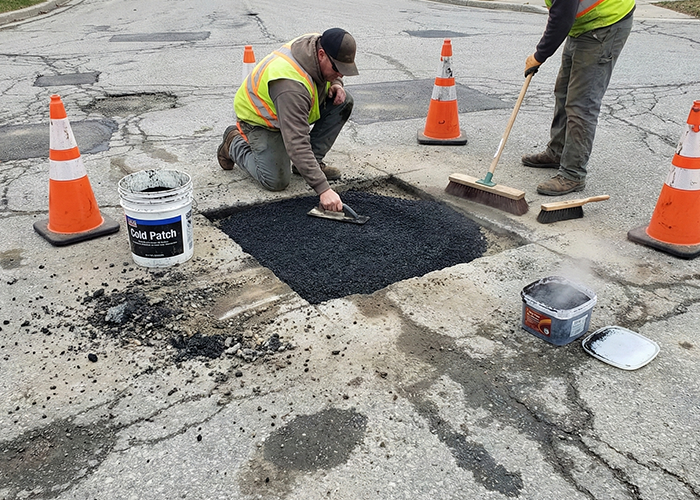
Cold patch has a place, and it is a useful one. Plenty of pothole repair myths begin with a cold patch that “held” for a short stretch, then gets treated like a long-term solution. In reality, cold mix works best as a stopgap that restores safety until a more durable repair can be scheduled.
A cold patch often fails because it never bonds tightly to the old asphalt. Heat helps asphalt knit together, and cold materials cannot rely on that same bonding. Traffic can then pull at the edges, water slips in, and the same spot starts to unravel.
Hot mix, warm mix, or a semi-permanent method usually lasts longer because the repair acts more like real pavement. Better preparation helps too, even when cold mix is the only option. Cleaner edges, a tack coat, and solid compaction can stretch the life of an emergency patch.
Myth: Water in Hole is Fine
A wet pothole can look harmless, especially during a rainy week when every hole feels damp. Water, however, blocks bonding and weakens the base material under the patch. A repair placed over standing water is often a repair placed over future failure.
Moisture also carries fines out of the base as vehicles pass over the area. That movement creates a soft pocket that keeps growing. Even a great mix cannot perform well on top of a mushy foundation.
Drying the hole matters, even when time feels tight. A broom and blower can do a lot, and heat can help when conditions allow. Better results come from starting with a clean, as-dry-as-possible hole, then building the patch on something stable.
Myth: Loose Edges do not Matter

A pothole rarely has clean walls. Most holes have broken, crumbled edges that keep shedding under traffic. Patching over those loose edges is like painting over peeling paint; it looks finished, but it is not anchored.
Squared edges create a defined repair area with stronger sides. A vertical face gives the patch material something solid to press against, which improves resistance to wheel forces. The repair then behaves less like a plug and more like part of the pavement.
The base under the edges matters too. Debris and weak material need to be removed, or the patch will sink as soon as vehicles return. A little more prep can feel slower in the moment, yet fewer repeat calls tend to follow.
Myth: Compaction is Optional
A patch that is not compacted enough will move. Many pothole repair myths skip this step or treat it like a bonus, even though density drives durability. Gaps left in the mix give water and traffic an easy way to break the patch apart.
Compaction also helps the patch match the surrounding pavement height. A patch left proud can get hit like a speed bump, while a patch left low can collect water. Either way, stress concentrates and the repair starts to break down.
Better compaction is not always about bigger equipment. A vibrating plate compactor can do solid work on small areas, and a roller can help on larger patches. Layer thickness matters as well, since thinner lifts compact more evenly than one thick dump.
Myth: Deeper Mix Fixes Everything
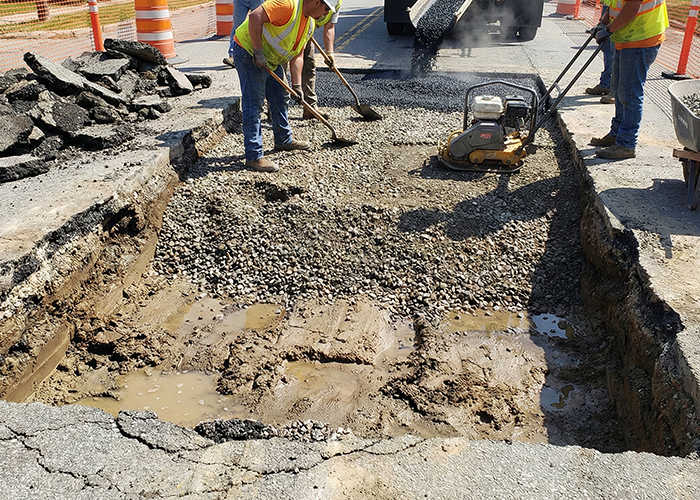
More asphalt in the hole sounds logical, and sometimes it is needed. Still, depth alone does not solve a failing base, a drainage problem, or a soft subgrade. When the support under the asphalt is compromised, the surface will keep collapsing.
A deeper pothole can signal structural damage, not just surface wear. That situation can call for a dig-out and rebuild of the failed layers, not a simple top-off. The goal becomes restoring strength, not filling space.
Full-depth repairs often cost more upfront, yet they can be the cheaper path over time when the same area keeps breaking. Repeated patching in the same location also adds risk, since each cycle can widen the damaged zone. A targeted rebuild can stop the loop.
Myth: Sealcoating Stops Potholes
Sealcoating protects asphalt from sunlight, oxidation, and minor surface wear. It can make a lot look cleaner and slow down some surface aging. A sealcoat, though, does not rebuild lost structure or replace material that is already breaking apart.
Potholes usually form after water and traffic work together on weak spots. Once the pavement is cracking, raveling, or shedding aggregate, a thin coating cannot hold it together. The coating may even hide early warning signs that deserve attention.
A smarter sequence puts repairs first, then protection. Pothole patching, crack sealing, and spot repairs create a sound surface. Sealcoating then supports that work instead of trying to mask problems it cannot solve.
Myth: Crack Sealing is Cosmetic

Cracks look small, so they get treated like a cosmetic issue. Many potholes begin as cracks that were allowed to widen, collect water, and flex under traffic. Over time, the asphalt around the crack breaks apart, and a pothole opens up.
Crack sealing can slow that chain reaction by blocking water entry. That single step can reduce freeze-thaw damage and keep the base from being washed out. For communities that see winter weather, this step can pay for itself in fewer emergency patches.
These pothole repair facts are not meant to scare anyone into over-maintenance. The point is simple: small problems tend to stay small when water is kept out. A consistent crack program supports every pothole repair choice that follows.
Myth: Potholes Mean bad Asphalt Only
Poor materials can contribute, yet potholes are often the result of several factors stacking up. Freeze-thaw cycles expand water, heavy vehicles stress weak spots, and poor drainage keeps the area wet. Those conditions can overwhelm even decent pavement.
Utility cuts and past repairs can also play a role. A trench patch that settled, a seam that opened, or a joint that was never sealed can create the start of a failure line. Once a weak path exists, traffic keeps working it.
A good diagnosis looks wider than the hole. Patterns across a parking lane, a drainage low spot, or repeated failures near inlets tell a story. That story can guide repair choices that actually address the cause.
Myth: any Crew can Patch Asphalt
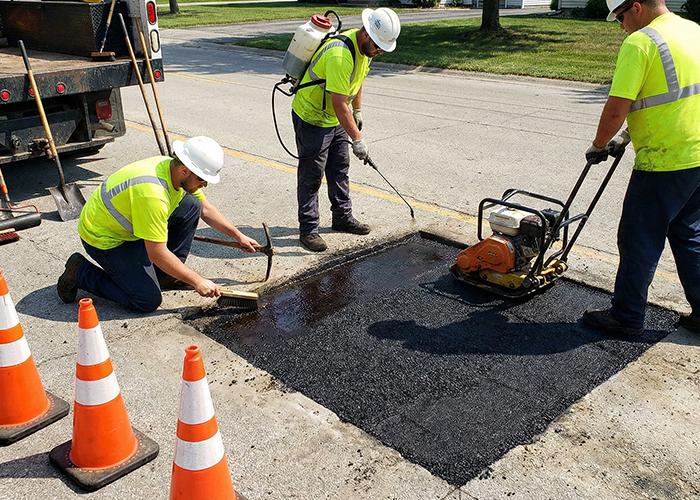
Patching looks straightforward, so it can get treated like a basic task. Quality repairs depend on the right materials, the right preparation, and the right equipment for the site. Work zones, traffic flow, and site safety add another layer that should not be guessed at.
Experience also shows up in the small details. Edge preparation, tack application, lift thickness, and finish height can be handled well or handled quickly. The difference usually shows a few storms later.
A few practical questions can help screen a contractor before the first patch is placed. Straight answers usually point to a crew that cares about long-term results:
- What patch method is planned for the season and the traffic level?
- Which compaction tools will be used for small areas and larger areas?
- How will water and debris be removed before placement?
- What steps will be taken to treat edges and promote bonding?
- How will the finished patch height be checked and corrected?
Myth: one Repair Fits Every Season
Weather changes the rules for asphalt work. Cold temperatures reduce workability, moisture lingers longer, and the window for bonding can shrink. That is why some winter repairs are designed as safe, temporary solutions.
Seasonal planning keeps expectations realistic. Winter patches can focus on restoring safety and preventing damage from spreading. Warmer months can then support longer-lasting repairs when materials and conditions cooperate.
Some agencies keep specialized mixes and tools on hand for colder periods. That approach reduces delay and keeps holes from growing. Later, a permanent repair can be scheduled when the site can be cleaned, dried, and rebuilt properly.
Myth: Patching Ends the Story
A patch is a repair, yet it is not a maintenance plan, and pothole repair myths can make follow-up feel unnecessary. High-traffic areas, drainage problems, and aging surfaces keep working against even solid patches. Follow-up helps catch early failures before they expand into bigger repairs.
Simple tracking can reveal patterns that matter. A map of repeat locations, patch dates, and weather conditions can show which areas need more than spot work. That information also supports budgeting, since it turns random emergencies into planned projects.
A few habits tend to reduce repeat potholes without turning maintenance into a constant project. Steady attention usually beats big cleanups done once a year:
- Regular inspections after major storms and seasonal temperature swings
- Prompt crack sealing in active traffic areas
- Drainage checks near low spots, inlets, and downspouts
- Spot repairs before raveling turns into missing material
- Periodic reviews of traffic patterns and loading zones
Myth: Sand and Gravel are “Good Enough”
Loose fill feels like a quick safety move, especially when a pothole is deep and crews are stretched thin. Sand, gravel, or dirt can reduce the immediate jolt, yet those materials rarely lock in place under traffic. Vehicles push the fill aside, and the hole often returns in a worse shape.
Safety can suffer too. Loose material can scatter into travel paths, create skid risks, and clog drainage points. Cleanup then becomes part of the “repair,” and the area still needs to be patched again with asphalt.
A better temporary approach still uses asphalt-based material, even if a later replacement is expected. Cold mix placed with care and compacted as well as possible tends to stay put longer than loose fill. That extra stability can buy time until a lasting repair is scheduled.
Myth: Tack Coat is Optional
Bonding gets overlooked because it is not flashy. Many pothole repair myths treat the hole like a container, as if the mix will stay put simply because it is heavy. In reality, the interface between old pavement and new material is where failures often start.
A tack coat or bonding agent improves adhesion at the sides and bottom of the repair. Better adhesion helps resist edge separation, which is a common path to water entry and repeat damage. Even a strong mix can struggle when it is not tied into the surrounding pavement.
Good bonding practices also support cleaner finishes. A patch that grips the walls is easier to compact and less likely to shove or slide under equipment. When crews have the materials and the weather supports it, this step is one of the simplest ways to raise patch performance.
Smooth Roads Ahead
The loudest advice usually creates the most pothole repair myths, yet pavement does not respond to volume. Better repairs come from clean prep, solid compaction, and realistic choices for the season. With a steady plan and the right fixes at the right time, smoother surfaces become the norm instead of a lucky break.
Related Articles
- What Is Stamped Concrete And Stamped Asphalt?
- How To Remove Oil Spots From Driveways: DIY Or Call The Pros?
- How Is Pothole Patching Done?
{
“@context”: “https://schema.org”,
“@graph”: [
{
“@type”: “BlogPosting”,
“headline”: “Asphalt Pothole Repair Myths: Fact vs Fiction”,
“image”: [
“https://www.pothole123.com/wp-content/uploads/2026/01/Asphalt-Pothole-Repair-Myths-Fact-vs-Fiction.webp”
],
“datePublished”: “2025-12-03T07:00:00+08:00”,
“author”: {
“@type”: “Person”,
“name”: “The Pothole Repair Carolinas Team”
},
“publisher”: {
“@type”: “Organization”,
“name”: “Pothole Repair Carolinas”,
“logo”: {
“@type”: “ImageObject”,
“url”: “https://www.pothole123.com/wp-content/uploads/2022/09/PRC-Logo.png”
}
},
“description”: “The experts at Pothole Repair Carolinas discuss common asphalt pothole repair myths and the facts behind longer-lasting repairs.”
},
{
“@type”: “FAQPage”,
“mainEntity”: [
{
“@type”: “Question”,
“name”: “Is cold patch a permanent pothole repair?”,
“acceptedAnswer”: {
“@type”: “Answer”,
“text”: “Cold patch is best for temporary, safety-focused repairs. A longer-lasting fix usually requires better prep, stronger bonding, and the right mix for the season and traffic level.”
}
},
{
“@type”: “Question”,
“name”: “Can a pothole be repaired if there is water in the hole?”,
“acceptedAnswer”: {
“@type”: “Answer”,
“text”: “Water in the hole can prevent the patch from bonding and can weaken the base. Better results come from removing standing water, clearing debris, and drying the area as much as possible before placing material.”
}
},
{
“@type”: “Question”,
“name”: “Does sealcoating prevent potholes?”,
“acceptedAnswer”: {
“@type”: “Answer”,
“text”: “Sealcoating helps protect asphalt from surface aging, but it does not rebuild weak pavement or fix structural problems. Repairs and crack sealing should come first, then sealcoating can help protect the improved surface.”
}
},
{
“@type”: “Question”,
“name”: “Why do pothole patches fail so quickly?”,
“acceptedAnswer”: {
“@type”: “Answer”,
“text”: “Fast failures often come from poor edge prep, trapped moisture, weak base material, or inadequate compaction. When the patch is not bonded and compacted well, traffic and water can pull it apart.”
}
},
{
“@type”: “Question”,
“name”: “What makes a pothole repair last longer?”,
“acceptedAnswer”: {
“@type”: “Answer”,
“text”: “Clean, squared edges, a stable base, a bonding agent when appropriate, and thorough compaction tend to extend patch life. Matching the repair method to the season and traffic load also helps reduce repeat failures.”
}
}
]
}
]
}