
Potholes rarely show up out of nowhere. Small cracks, trapped water, and a few rough temperature swings usually do the work first. Once you understand how weather affects potholes, spotting trouble early gets much easier.
How Weather Affects Potholes: Moisture
Water is the quiet troublemaker behind most pavement failures. A tiny crack lets moisture slip into the asphalt and down into the base. Traffic loads then press and flex the surface until that weakened spot gives way.
That is why the same parking lot can look fine in the morning and feel rough by the weekend. The surface is being stressed every time a tire rolls over a damp, soft area. In simple terms, weather affect potholes by feeding water into places the pavement cannot handle.
Moisture Finds the Weak Spots
Hairline cracks around utility cuts, joints, and patched seams tend to drink in water first. Low spots that hold puddles act like a refill station for that moisture. Once the base stays wet, the surface loses support and starts to break.
Drainage plays a bigger role than most people expect. A curb that traps runoff, a clogged inlet, or a grade that pushes water toward the same corner can set up repeat failures in that exact zone.
Freeze-Thaw Cycles Turn Cracks Into Cavities
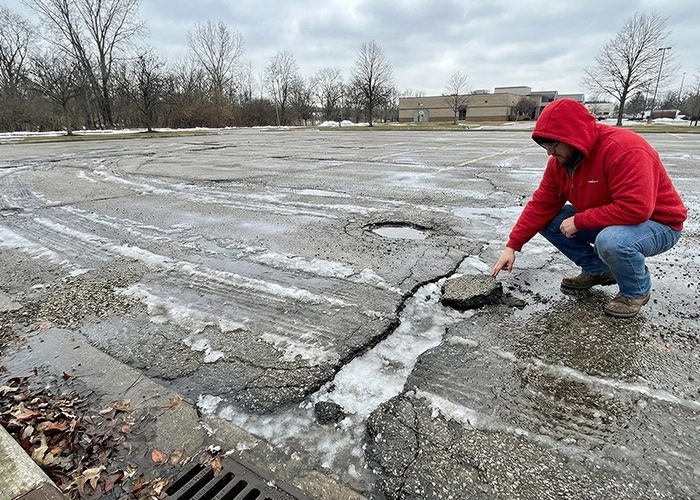
Cold snaps followed by mild afternoons can be brutal on asphalt. Water inside a crack expands when it freezes, then relaxes when it melts. That repeated push and pull widens the crack and makes the surface easier to break apart.
The pattern behind cold weather and pothole reports often comes down to this cycle. Late winter tends to be loud because thaw days arrive while the ground below still holds ice. Meltwater has nowhere to go, so the base stays saturated.
Thaw Weakens the Base, Then Traffic Finishes It
A softened base cannot spread vehicle weight the way it should. The top layer bends more, cracks faster, and starts shedding pieces. A hole is formed once those loose chunks get knocked out by tires.
In areas with snowplows, extra scraping and vibration can speed up failure at edges and joints. Even a good surface can take a hit if the base is already wet and weak.
Heavy Rain Brings Fast Damage
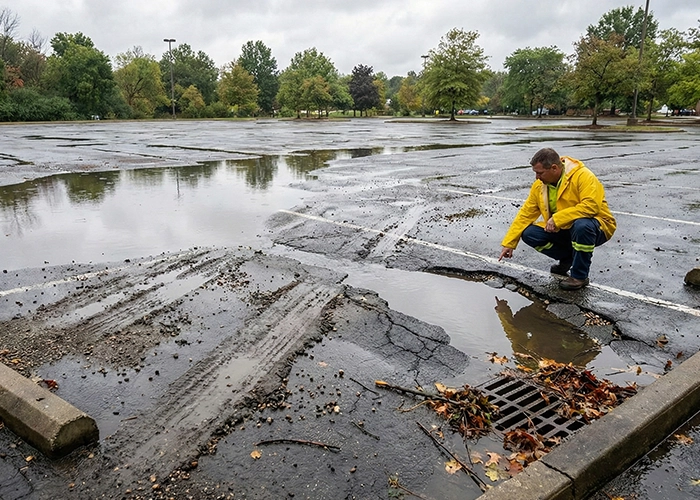
A long wet stretch can move a pavement from “fine” to “failing” in a short time. Water does not just sit on the surface. It also pumps through cracks under moving traffic, pushing fine material out of the base and leaving gaps behind.
The link between weather and potholes shows up after big storms for a reason. Runoff concentrates in the same low spots, and the pavement gets hammered while it is soft. Shortcuts in drainage design become obvious right after a downpour.
Standing Water Is a Red Flag
Puddles that linger for hours deserve attention. That water is giving cracks time to fill and the base time to weaken. In many lots, the first potholes appear right where tires hit water every day, such as entrances, turning lanes, and dumpster pads.
A quick walk after rain can reveal more than a dry day inspection. Darkened crack lines, soft edges, and gritty debris near joints all hint that water is moving through the structure.
Summer Heat Creates a Different Kind of Stress

Hot weather does not freeze pavement, yet it can still damage it. Asphalt binder softens as temperatures climb, so heavy loads can press the surface into ruts and shallow depressions. Later, those deformed spots collect water, and the cycle restarts.
The sun also dries and ages the binder over time. A brittle surface cracks sooner, especially where tires turn, brake, and accelerate. In those areas, weather affects potholes by changing the pavement’s flexibility and making it less able to bounce back.
Patches and Edges Need Extra Care
Parking lot edges often break first because they lack support on one side. Heat can exaggerate that weakness, especially when trucks ride the edge or when soil erodes under the shoulder. Patch seams can also open if the old and new materials expand at different rates.
Surface texture matters here. Raveling, which looks like loose stones or grit, can be an early sign that the binder is drying out and the top layer is starting to shed.
Spring and Fall Bring “Swing” Weather
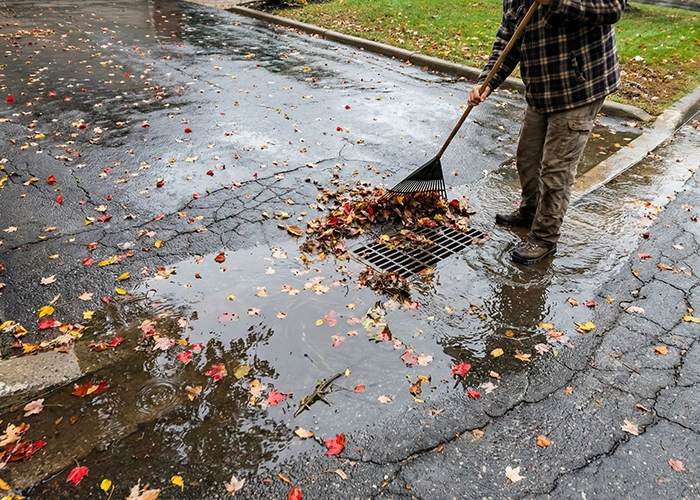
In many regions, the shoulder seasons cause the most surprise. Cool nights and warmer days create daily movement in the pavement. Rain arrives more often, leaves stay in drains, and water gets trapped in places that should stay dry.
The bigger picture is simple: seasons and potholes tend to track one another because pavement responds to repeated change. A stable, dry stretch gives the surface time to rest. A week of swings keeps the structure under stress.
Debris and Clogged Drains Add Fuel
Leaves and grit can block inlets and push runoff across the pavement. Water then follows the path of least resistance, which usually means cracks and joints. In lots with poor grading, that runoff can also cut channels along edges and undermine support.
Maintenance crews sometimes focus on the hole and miss the water source. A clean drain, a corrected low spot, or a sealed crack can reduce repeat repairs in the same location.
Things to Look out for Before a Pothole Opens
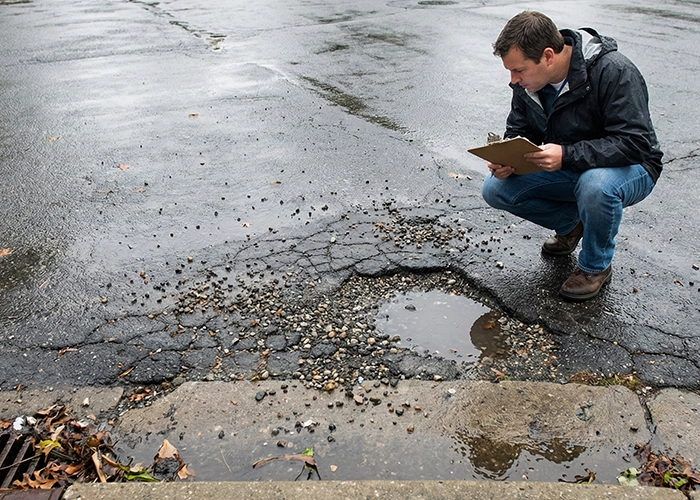
Early warning signs show up long before a crater appears. A light, steady inspection routine helps, especially after storms and temperature swings. Most issues are easier to fix while they are still small.
Several clues tend to show up together:
- A network of tight cracks that looks like a rough web
- A soft spot that flexes under a slow-moving vehicle
- Loose gravel or grit collecting along a crack line
- A shallow dip that holds water after rain
- Broken edges near curbs, drains, or pavement seams
Timing Helps More Than Guesswork
Repairing windows matters. Cold, wet days limit some materials and slow curing, so temporary fixes may be used until conditions improve. A plan for quick patching after storms can prevent a small break from being widened by traffic.
For property managers, a simple log can make patterns clear. Notes about where water sits, where cracks keep opening, and when new holes appear will guide smarter repairs. In the long run, weather affects potholes in predictable ways, and the pavement usually tells you what it needs.
Last Look
A little attention after rain or a temperature swing can save a lot of frustration later. Pavement lasts longer when water is kept out and small cracks are handled early. That is the real advantage of knowing how the weather affects potholes.
Related Articles: