
Parking lots and private drives get worn down by turning tires, sun, and rain. Infrared pothole repair fixes many surface holes without cutting out a big square of pavement. A smooth blend often follows, so the patch does not stand out.
Infrared Pothole Repair Basics
Infrared pothole repair uses steady heat to soften old asphalt, so crews can work it again instead of hauling it away. A crew loosens, mixes, and packs the warmed material back into place, with a little fresh mix added when the hole needs it. A blended edge helps the repair act like part of the original surface.
Many property teams like the small footprint. Infrared repair can focus on one pothole, a small dip, or a rough spot near a seam without bringing in heavy saws and loads of debris. Fewer cut lines also mean fewer weak seams where water can work its way in.
A strong patch still depends on what sits under the mat. A firm base gives the crew something solid to pack against, so the repaired area holds its shape. For that reason, a quick look at nearby damage usually comes first.
How the Heat Softens Asphalt

Most heaters warm the pavement into a workable range, often around 325 to 350 degrees Fahrenheit. That range makes the binder soft enough for the stone to move and lock back together. Even heating matters, since too much heat can bake the binder and leave a dry, brittle spot.
Many crews heat for about five to 10 minutes, with time shifting based on wind, shade, and mat thickness. Heat often reaches about 1.5 to 2.5 inches deep, which covers a lot of common lot damage. Deeper failures still show up fast, even after a clean surface blend.
Infrared energy delivers that heat without an open flame on the asphalt. A steady heat pattern lowers the chance of scorching while the surface softens. Better control also makes it easier to match the patch to the area around it.
Site Prep That Keeps Heat Honest
A clean, dry surface gives heat a fair shot. Loose stone, leaves, and standing water can block heat and slow softening, so a sweep and a quick dry check come first. Water trapped in a hole can also flash into steam and push the mix around.
Traffic control helps the finish. Cones and a short sign keep cars away from the heater and leave space for packing the patch. Fewer surprises also help the crew stay on pace.
Edge planning matters, too. A crew often heats a bit beyond the visible hole so the blend reaches sound pavement. That extra margin helps the patch fade out instead of forming a hard ring.
What Happens During the Patch
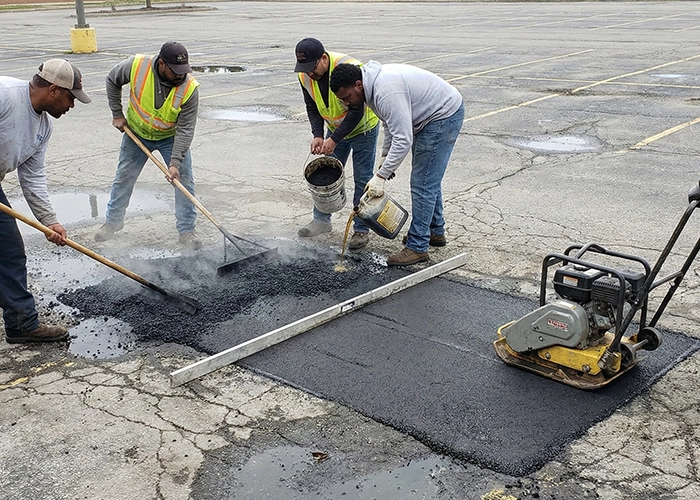
Once the asphalt softens, the crew loosens the warm area with rakes and lutes. That work breaks up tight chunks and opens the mix so it can blend. A flatter finish becomes easier when the material moves as one mass.
An oil additive may go in next, since older asphalt can dry out over time. A crew can add fresh hot mix in small amounts to rebuild low spots or fill missing material. A light touch helps, since too much new mix can act like a separate layer.
Packing comes last. A plate compactor or small roller presses the mix tight, pushing out air and locking stone in place. A quick check with a straightedge helps confirm the surface sits flush with the pavement around it.
A Crew Flow That Moves Fast
A steady rhythm keeps the surface warm and workable, so the patch can be packed before it cools. A clear flow also reduces mistakes when the site stays busy.
- A crew sweeps and dries the area.
- The heater warms the asphalt until it turns pliable.
- The crew loosens and blends the warm mix, then adds oil additive and fresh mix as needed.
- The crew shapes the patch to match grade and drainage.
- The crew packs the repair tight until the surface feels firm.
A short cool-down period usually follows. In many lots, traffic can return sooner than it would after a cut-and-replace patch. Less downtime often matters more than the repair itself.
Building a Strong Heat Bond
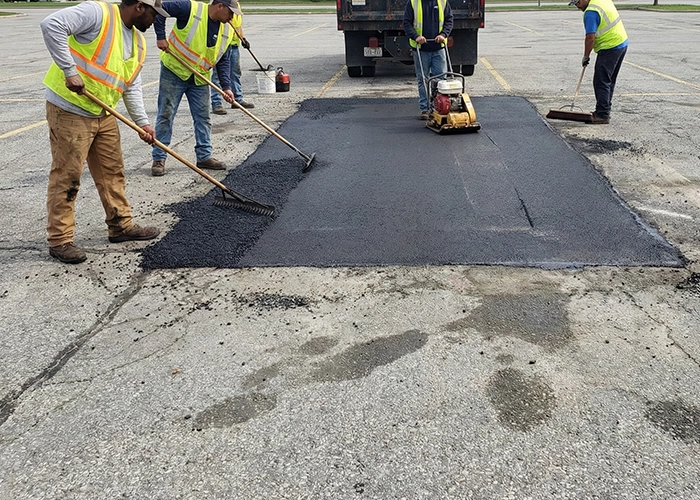
A big advantage of infrared pothole repair shows up at the edge. Heat reaches past the hole, so the old mat can blend into the patched area instead of meeting it at a sharp cut. That softer transition helps limit the crack line that often forms around square patches.
Water control improves, too. Seams and corners give water a place to sit, then freeze-thaw and tire turns do the rest. A feathered edge gives water fewer easy paths.
Packing quality still decides how long the patch lasts. A tight finish resists ruts, and a level surface avoids a lip that catches tires. For that reason, many crews pack in passes and watch for movement before reopening the lane.
When This Method Fits
Common lot trouble spots tend to repeat. Potholes near drains, rough areas at stop points, and worn wheel paths often respond well when the base stays solid. Infrared pothole repair works well here because the area around the hole can blend into the fix.
Small dips can be good targets as well. A low spot that holds water does not always need deep digging if the mat stays stable. A careful rework can restore slope and help water move to the right place.
Tight work zones benefit, too. Courtyards, loading areas, and spots near curbs can be hard to reach with saws and dump trucks. A compact heater setup can fit with less site impact.
Limits Worth Noting

Some failures run deeper than the top layer. Spreading cracks, soft spots, or a pothole that comes back in the same spot can point to base trouble that heat cannot fix. In those cases, full-depth patching often makes more sense.
Wet layers below the mat can also cause trouble. A damp top can be dried, yet water below can keep pushing up and weakening the repair zone. A short delay for better drying can save a patch from early breakup.
Heavy loads change the math, too. Frequent truck turns and hard braking put extra stress on any patch, no matter how clean it looks. A quick site check helps match the method to the real traffic.
Timing and Temperature in the Field
Cooler weather does not always stop this method. Heat-based patching can work in colder months as long as the pavement reaches the right heat and stays workable long enough to pack. Wind and shade still matter, so the heater time may run longer on a cold, breezy day.
Heat control protects the asphalt. A surface that gets too hot can age faster, while a surface that stays too cool will not blend well at the edge. A simple temp gun helps the crew stay in range without guessing.
Safety improves with a clear plan. A marked zone keeps people away from the heater and hot mix. A spotter near moving cars adds another layer of control in busy lots.
Quality Checks That Keep Patches Tight
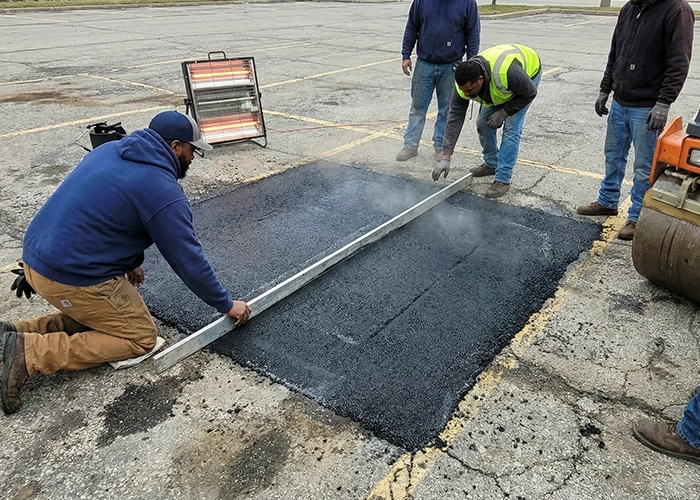
Grade should lead the check. A patch that sits high can feel like a bump, while a patch that sits low can hold water and invite new holes. A straightedge check right after packing can catch those issues while the mix still has warmth.
Edge feel matters, too. A gradual transition feels smoother and helps keep water from pooling at the edge. That line is easy to miss at a glance, so a quick hand check often helps.
Longer life comes from simple follow-up habits. A short hold on heavy loads can help, especially on hot days when asphalt stays softer. Routine crack sealing can also protect the area around the patch and slow the next round of damage.
Budget and Waste Benefits
Less cutting means less waste. With infrared pothole repair, much of the old asphalt stays on site and gets reused, so hauling and disposal drop. That change can add up when a property needs many small fixes each season.
Crew size can stay smaller, too. Fewer heavy tools can shorten the work window and reduce disruption for tenants and shoppers. A shorter closure also helps when repairs must happen during off-hours.
Looks still matter in many spaces. A blended patch tends to match the lot better than a sharp square cut, so the repair feels less like a patch. For many owners, that clean look becomes a practical bonus.
Back on the Road
Infrared pothole repair works best when heat, blending, and packing all get equal care. The right match between method and pavement condition helps the repair hold up through traffic and weather. A smoother surface and fewer weak seams can make the whole lot feel more stable.
Related Articles:
- Asphalt Pothole Repair Myths: Fact vs Fiction
- Infrared Pavement Patching: What Is It And Its Benefits
- How To Fix A Pothole The Right Way