
Damaged asphalt does not always need to be cut out and replaced. Infrared asphalt repair equipment can heat and reuse the existing pavement, helping trained crews make fast, smooth repairs with less waste and disruption.
Infrared Asphalt Repair Equipment Explained
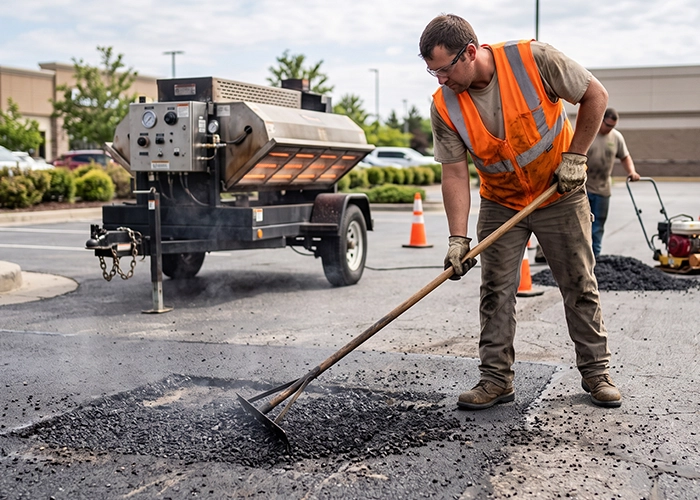
Infrared asphalt repair equipment uses radiant heat to warm a damaged section of asphalt. The heat penetrates the pavement and softens the asphalt without using an open flame directly on the surface. Once the area becomes workable, a crew can rake it, remove failed material, add fresh hot mix when needed, reshape the surface, and compact it.
The goal is to blend the repaired area with the pavement around it. Both the old asphalt and added material are hot when they meet, so they can form a strong thermal bond. This reduces the hard seam that often appears around a conventional cut-and-patch repair.
Infrared equipment comes in several sizes. Small walk-behind or trailer-mounted heaters suit parking lots, drive lanes, and limited repair work. Larger truck-mounted systems can carry heaters, hot boxes, compactors, and tools for crews that handle many repairs each day.
The Main Parts of an Infrared Repair System
Although designs differ, most infrared repair systems rely on the same core equipment. Each part supports a stage of the repair, from controlled heating to final compaction.
- Infrared heating chamber: This insulated chamber directs radiant heat toward the pavement. Its size determines how much surface can be treated during one heating cycle.
- Fuel system: Many units use propane to power the burners. Tanks, regulators, hoses, valves, and safety controls must be inspected and maintained.
- Asphalt hot box: A hot box keeps fresh or reclaimed asphalt at a workable temperature. Some repair rigs include one, while smaller crews may use a separate unit.
- Hand tools: Rakes, lutes, shovels, brooms, and asphalt picks help clean, loosen, blend, and grade the heated material.
- Compaction equipment: A vibratory plate compactor or roller presses the material into a dense patch. Good compaction is critical to the repair’s strength and resistance to water.
- Rejuvenator and application tools: A rejuvenator may be used on aged asphalt after scarification. The product and application rate should suit the pavement and repair method.
A complete setup lets the crew move from one step to the next while the asphalt remains hot. Delays matter because the material becomes harder to shape and compact as it cools.
What Infrared Equipment Can Repair

Infrared technology works best on localized problems in asphalt pavement. It is often used for potholes, surface failures, small depressions, utility cuts, rough joints, and damage near drains or manholes. It can also smooth areas that create a trip risk or hold shallow water because of a poor surface grade.
The method is useful for repairing newer patches that have begun to separate around their edges. Because the nearby pavement is heated too, the crew can rework the joint and reduce openings where water could enter. Infrared treatment may also correct rough transitions near speed bumps, ramps, and pavement repairs.
Not every damaged area is a good candidate. If the base beneath the asphalt has failed, heating the surface will not rebuild that base. Large areas with alligator cracking, deep movement, major drainage issues, or widespread structural failure often need removal, base repair, and replacement.
Benefits of Using Infrared Asphalt Repair Equipment
Property owners usually want a repair that lasts without closing a busy area for longer than needed. Infrared equipment can help meet both goals when the pavement problem fits the method and the work is completed correctly.
Faster Repairs and Less Disruption
A trained crew can often complete a modest repair in far less time than a full saw-cut replacement. There may be no need for saw cutting, heavy demolition, or hauling a large amount of broken asphalt away. Parking spaces, service lanes, and entrances can often reopen soon after the new surface has cooled enough for traffic.
That shorter work window is valuable at shopping centers, apartment communities, offices, schools, medical sites, and industrial properties. Crews can plan repairs during quieter hours and move through several problem areas in one visit.
Fewer Open Seams
A standard patch creates a defined joint between the old pavement and the new mix. That joint can admit water if it opens or is not sealed well. Water can then weaken the surrounding asphalt or the base below it.
Infrared repair heats the pavement beyond the damaged spot and allows the patch to be blended into that warm edge. The result is often described as seamless, although the repair boundary may still be visible. What matters is that the transition is bonded and tightly compacted.
Reuse of Existing Asphalt
Much of the original asphalt can remain in place and be reworked. Crews remove loose, contaminated, or failed material, but they do not always have to discard the full repair area. Less new mix may be required as a result.
This approach can reduce material use, hauling, and disposal. It also makes practical sense when a property has many small repairs spread across a parking lot.
A Smooth Finished Surface
The heated asphalt can be reshaped before it is compacted. This makes infrared equipment helpful for shallow depressions, raised patch edges, rough utility cuts, and other surface defects that affect ride quality or drainage.
A smooth repair also improves the appearance of a maintained parking lot. Clean pavement sends a better message to tenants, customers, residents, and visitors than a collection of loose temporary patches.
Flexible Repair Sizes
Infrared heaters are available in different chamber sizes, and some units have adjustable or sectional heating zones. A contractor can match the equipment to a small pothole, a narrow pavement joint, or a larger failed section.
The repair should still extend beyond the visible damage. Heating a wider border gives the crew workable material around the affected area and helps form a stronger edge.
The Infrared Asphalt Repair Process
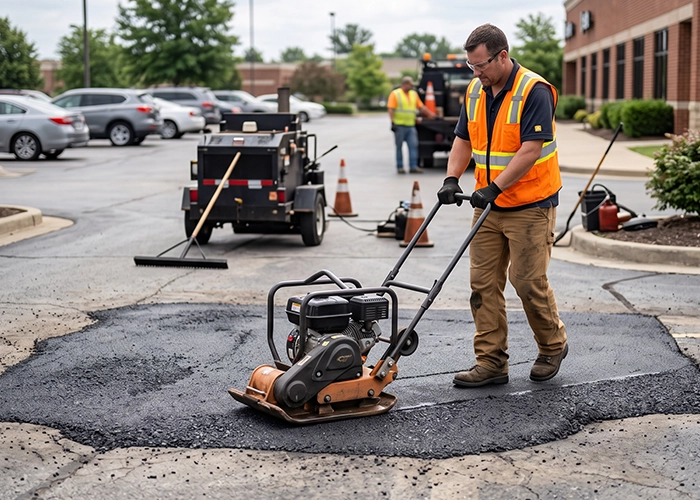
Good equipment cannot make up for poor preparation. A reliable infrared pothole repair follows a deliberate process and gives special attention to heat control, edge bonding, grade, and compaction.
- Inspect the damage. The crew checks the size and depth of the defect, looks for water problems, and decides whether the base appears stable. If the pavement moves under load or shows deep structural failure, another method may be recommended.
- Clean and dry the area. Dirt, standing water, vegetation, loose stone, oil-soaked material, and other debris are cleared. A clean surface heats more evenly and helps new material bond.
- Position the heater. The heating chamber is placed over the defect with a border beyond the damaged area. The crew protects nearby paint, sealant, concrete, landscaping, vehicles, and other items that could be affected by heat.
- Heat the pavement gradually. The operator monitors the surface instead of relying only on a timer. Overheating can burn the asphalt binder, while inadequate heating leaves the material too stiff to blend and compact well.
- Scarify the softened asphalt. The crew rakes the heated area, paying attention to the full depth that has become workable. Failed or contaminated pieces are removed rather than mixed back into the repair.
- Add rejuvenator and new mix as needed. The existing material is treated and blended according to its condition. Fresh hot mix replaces missing volume and helps bring the area to the proper grade.
- Shape and compact the repair. The edges are compacted first to help join the repair to the surrounding pavement. The center is then compacted until the patch is dense, stable, and even with nearby asphalt.
- Inspect the finished work. The crew checks the slope, texture, edges, and surface height. The area remains protected until it is ready to receive traffic.
Why Operator Skill Matters
Infrared equipment may look simple, but the operator must read the pavement. Old gray asphalt absorbs heat differently from a newer dark mix. Wind can pull heat away, cold ground can extend heating time, and moisture can interfere with the work.
An experienced technician watches how the asphalt responds and adjusts the process. The operator must know when the full repair depth is ready, which material should be removed, how much new mix is needed, and when compaction must begin.
Poor technique can scorch the binder, crush aggregate, leave loose edges, or trap a weak layer under the patch. A qualified contractor should be able to explain both the equipment and the repair decisions made on site.
Weather and Site Conditions to Consider
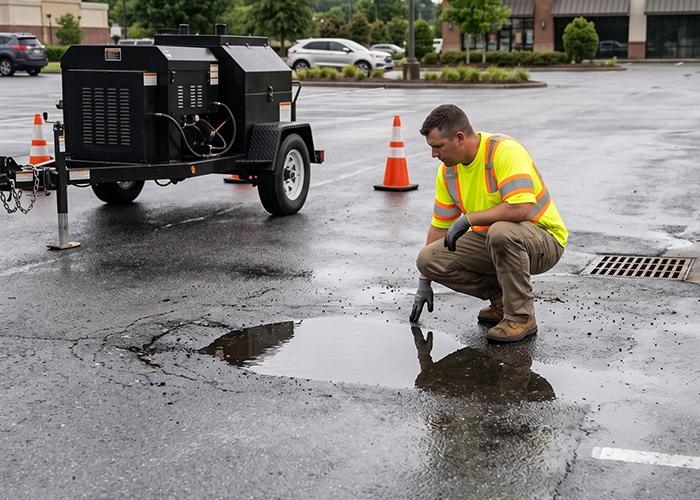
Infrared equipment can extend the repair season because it supplies controlled heat at the work area. Still, it does not remove every weather limit. Heavy rain, standing water, strong wind, extreme cold, and a frozen or saturated base can affect safety and repair quality.
The work area also needs enough clearance for the heater and support equipment. Vehicles must be moved, pedestrian access should be controlled, and nearby materials must be protected. Propane-powered equipment requires safe handling, ventilation, and separation from ignition risks.
Drainage deserves attention before the repair begins. If runoff keeps collecting in the same place, a smooth new patch may not solve the cause. The grade, inlet condition, surrounding slope, and base should be evaluated when puddles or repeat potholes are present.
How to Choose the Right Infrared Equipment
Contractors and maintenance teams should select equipment based on the work they actually perform. A very large unit may be inefficient in tight parking areas, while a small heater can slow production on streets or large commercial sites.
Consider these factors before buying or renting a system:
- Typical repair dimensions and daily repair volume
- Trailer-mounted, skid-mounted, or truck-mounted design
- Heating chamber size and adjustable heating zones
- Fuel capacity, consumption, and local propane access
- Warm-up time and expected heating cycles
- Hot box capacity for fresh asphalt
- Towing requirements, storage needs, and jobsite access
- Availability of parts, service, warranties, and operator training
- Safety controls and ease of routine inspection
- Compaction equipment needed for the planned repair depth
Productivity claims should be viewed in context. Actual output depends on travel between defects, surface preparation, heating conditions, crew experience, asphalt supply, and repair size. A demonstration on pavement similar to the intended work can reveal more than a specification sheet alone.
Maintenance and Safety for Infrared Equipment

Infrared units work around high heat and pressurized fuel, so routine care is essential. Operators should follow the manufacturer’s instructions and all applicable workplace, fire, transport, and fuel-storage rules.
Before use, crews should inspect hoses, regulators, fittings, burners, shields, ignition systems, and mounting points. Damaged parts must be addressed before the heater is lit. The heating chamber should also be kept free of debris that could burn or block even heat.
Personal protective equipment may include heat-resistant gloves, safety glasses, high-visibility clothing, long workwear, and suitable boots. Traffic control is also part of safe equipment use. Cones, barriers, signs, and spotters should match the risks of the site.
Give Damaged Asphalt a Better Second Life
Infrared asphalt repair equipment gives crews a practical way to reuse sound pavement, blend in new material, and create a smooth repair with less disruption.
When the base is stable and the work is handled by a trained team, the process can be an efficient answer to potholes and other localized asphalt damage.
Protect your pavement before the damage spreads. Get in touch with Pothole Repair Carolinas today for a professional assessment and a repair plan built around your property’s needs.
Related Articles: