
Humidity may not seem as damaging as heavy rain or freezing temperatures, but it plays a major role in pavement wear. Over time, excess moisture in the air can weaken asphalt surfaces, speed up cracking, and create conditions that lead to potholes and costly repairs.
How Humidity Affects Asphalt Deterioration Over Time
Understanding how humidity affects asphalt deterioration starts with understanding how asphalt reacts to moisture. Asphalt pavement is designed to handle traffic, sunlight, and weather exposure, but it is still a porous material. Even when a surface looks solid, tiny openings allow water vapor and moisture to move in and out over time.
High humidity keeps pavement exposed to moisture for longer periods. Instead of drying fully after rain or overnight condensation, asphalt stays damp beneath the surface. That lingering moisture slowly weakens the bond between asphalt binder and aggregate.
As the material loses strength, the pavement becomes more vulnerable to cracks, soft spots, and surface breakdown. In areas with constant humidity, this process tends to happen faster than many property owners realize.
Humidity also creates ideal conditions for oxidation. Asphalt naturally oxidizes as it ages, but humid environments can accelerate chemical reactions within the pavement structure. The result is a brittle surface that cracks more easily under traffic pressure.
Why Moisture Is a Serious Threat to Asphalt
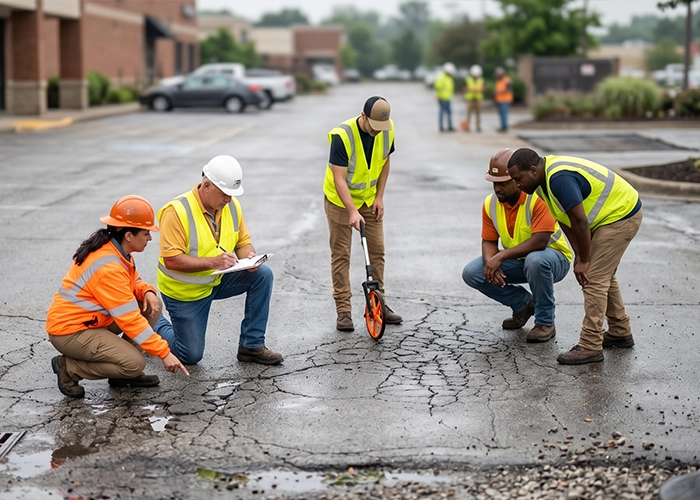
Water is one of the biggest enemies of pavement. Humidity may not flood a parking lot the way a storm does, but it contributes to long-term moisture exposure that wears asphalt down from the inside.
When moisture enters pavement layers, several problems can develop:
- Reduced pavement strength
- Weakening of the asphalt binder
- Expansion and contraction stress
- Surface softening during hot weather
- Faster crack formation
- Base layer instability
The damage often begins below the surface before drivers ever notice visible issues. By the time potholes appear, moisture has usually been affecting the pavement structure for months or even years.
In humid climates, this process becomes even more difficult because pavement rarely gets enough time to dry completely. That constant cycle of moisture exposure creates ongoing stress beneath the surface.
The Connection Between Humidity and Oxidation
Many people associate oxidation with dry heat and sunlight, but humidity also contributes to the problem. Asphalt binder contains oils that help keep pavement flexible. As oxidation occurs, those oils begin to break down.
Once flexibility decreases, asphalt becomes stiff and fragile. Cracks start forming more easily under daily traffic loads. Even small cracks allow additional moisture to enter the pavement system.
Humidity speeds up this cycle because moisture and heat often work together. Warm, humid conditions create an environment where pavement materials expand, contract, and weaken more rapidly.
This is especially common in southern states and coastal regions where high humidity levels remain consistent throughout much of the year.
How Humid Weather Leads to Potholes

Potholes rarely appear overnight. Most start with minor pavement damage that gradually worsens due to moisture infiltration.
Humidity contributes to pothole formation in several ways:
- Moisture enters tiny pavement cracks.
- The underlying base becomes weaker over time.
- Traffic pressure causes the pavement to flex.
- Loose material begins separating from the surface.
- Sections of asphalt eventually collapse.
When humid weather combines with rain, standing water, or poor drainage, pothole development accelerates quickly.
Property owners sometimes assume potholes are only a winter problem because of freeze-thaw cycles. While freezing temperatures are damaging, humid climates can create year-round moisture stress that produces similar pavement failures.
Why Parking Lots Often Deteriorate Faster in Humid Areas
Commercial parking lots experience constant traffic pressure. Vehicles repeatedly stop, turn, and idle in the same locations every day. When humidity weakens asphalt surfaces, those traffic patterns start causing visible wear much faster.
Areas near entrances, loading zones, and drive lanes usually show the earliest signs of damage. You may notice:
- Surface cracking
- Fading pavement color
- Loose gravel
- Soft spots
- Standing water
- Edge deterioration
Humidity becomes even more damaging when drainage issues exist. Water trapped near curbs or low areas keeps moisture levels high beneath the pavement.
Over time, weakened sections begin failing faster than surrounding areas.
The Role of Overnight Condensation
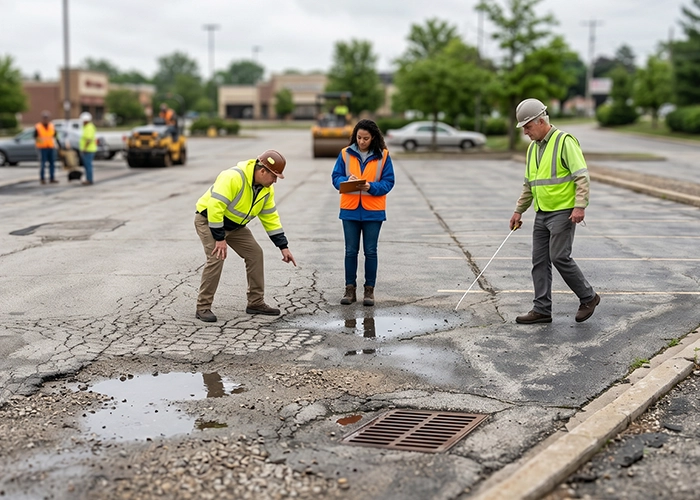
Humidity damage is not limited to storms or rainfall. Overnight condensation can also affect pavement conditions.
When temperatures drop during the evening, moisture in the air settles onto asphalt surfaces. In humid regions, this happens frequently. Pavement may remain damp for hours before drying the next day.
Repeated moisture exposure contributes to gradual deterioration. While condensation alone may not destroy pavement, constant dampness adds stress that compounds over time.
Older asphalt surfaces are especially vulnerable because aging pavement already contains more cracks and porous areas where moisture can collect.
How Humidity Impacts Asphalt During Summer
Summer heat already places significant stress on asphalt. Add humidity to the equation, and the problem becomes worse.
Hot, humid conditions soften asphalt binder. Heavy traffic traveling across softened pavement creates rutting, depressions, and surface movement. Parking lots with delivery trucks or high vehicle volume often experience this issue first.
Humidity also slows evaporation after rainfall. Instead of drying quickly, pavement remains wet longer, increasing the amount of moisture absorbed into surface cracks and joints.
This combination of heat and moisture speeds up pavement aging considerably.
Signs That Humidity Is Damaging Your Pavement
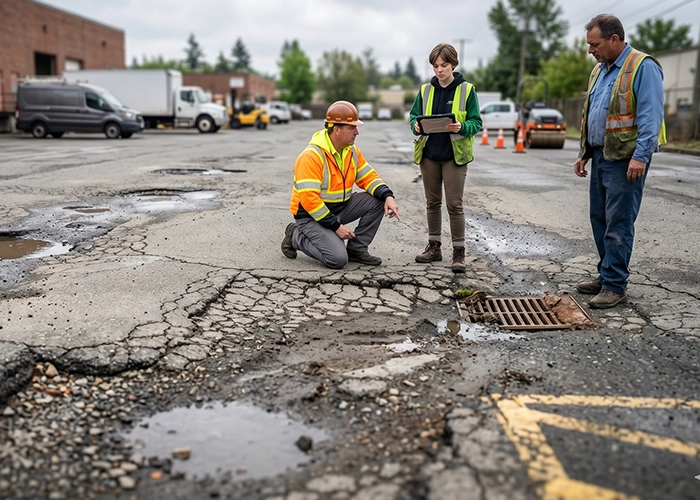
Humidity-related pavement damage often develops slowly. Many property owners miss the early warning signs because the changes appear minor at first.
Some of the most common indicators include:
Fine Surface Cracks
Small cracks may appear harmless initially, but they allow moisture to enter deeper pavement layers. Humid conditions can quickly expand these cracks over time.
Soft or Spongy Areas
Weak pavement sections may feel unstable under heavy vehicles. This often signals moisture infiltration beneath the surface.
Fading or Gray Asphalt
Oxidation caused by weather exposure gradually changes asphalt color. A faded appearance usually indicates aging pavement that has lost flexibility.
Water That Lingers After Rain
Standing water suggests drainage problems or pavement depressions. In humid climates, these wet areas remain saturated much longer.
Loose Aggregate
If gravel or small stones begin separating from the surface, moisture damage may already be affecting the binder.
Why Preventive Maintenance Matters More in Humid Climates
Preventive maintenance becomes critical in areas with high humidity because moisture-related damage tends to spread quickly once it starts.
Waiting until potholes appear usually means deeper structural repairs are already necessary. Addressing smaller problems early helps property owners avoid larger repair costs later.
Several maintenance strategies can significantly reduce humidity damage.
Sealcoating
Sealcoating adds a protective barrier that limits moisture penetration. It also helps slow oxidation caused by weather exposure.
Most commercial properties benefit from sealcoating every few years, though humid regions may require more frequent applications depending on traffic volume.
Crack Filling
Crack filling prevents moisture from reaching lower pavement layers. Even narrow cracks should be sealed before they expand.
Once water reaches the base layer, repairs become more expensive and time-consuming.
Drainage Improvements
Proper drainage is one of the most effective ways to protect asphalt. Water should move away from the pavement surface instead of pooling in low areas.
Drainage improvements may include:
- Regrading pavement
- Installing catch basins
- Repairing curbs
- Correcting slope issues
Timely Repairs
Small repairs help stop damage from spreading. Patching isolated problem areas early often prevents larger reconstruction projects later.
Why Humidity Affects Older Asphalt More Severely
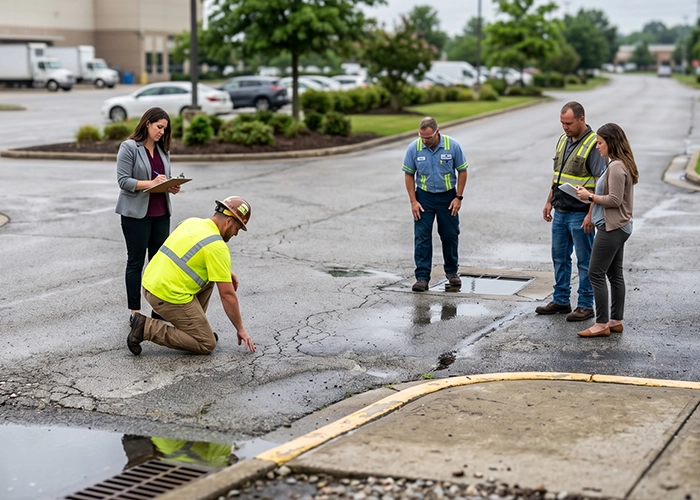
Older asphalt naturally becomes more porous over time. Years of traffic, sunlight, and weather exposure gradually weaken the surface structure.
Once pavement ages, humidity-related moisture enters more easily through worn areas and small cracks. The pavement then absorbs water faster and dries more slowly.
This creates a cycle where damage accelerates each year unless repairs are made.
Older parking lots also tend to have drainage issues caused by settling or surface movement. Poor drainage combined with humidity creates ideal conditions for pavement failure.
How Commercial Properties Can Reduce Moisture Damage
Commercial property managers often deal with expensive pavement repairs because parking lots experience constant use. The good news is that proactive maintenance helps reduce long-term deterioration.
Some practical steps include:
- Scheduling regular pavement inspections
- Repairing cracks immediately
- Keeping drainage systems clear
- Removing standing water quickly
- Applying sealcoating consistently
- Addressing potholes early
Maintenance schedules should match local climate conditions. Properties located in humid coastal or southern regions may need more frequent inspections than properties in drier climates.
The Cost of Ignoring Humidity Damage
Minor pavement problems rarely stay minor for long. Humidity allows moisture damage to spread beneath the surface where it may not be visible initially.
Ignoring early warning signs can lead to:
- Larger potholes
- Extensive cracking
- Base failure
- Drainage issues
- Trip hazards
- Vehicle damage claims
- Expensive reconstruction projects
For commercial properties, deteriorating pavement can also hurt curb appeal. Customers often associate cracked parking lots with poor maintenance overall.
Investing in preventive asphalt maintenance usually costs far less than full pavement replacement.
Why Professional Asphalt Inspections Are Important
Humidity damage is not always obvious from the surface alone. Professional pavement inspections help identify weak areas before major failures occur.
Experienced asphalt contractors evaluate:
- Surface condition
- Drainage performance
- Crack severity
- Structural stability
- Moisture intrusion risks
These inspections allow property owners to create maintenance plans based on current pavement conditions rather than waiting for emergencies.
Routine evaluations become especially valuable in humid regions where deterioration can progress quickly between seasons.
What Property Owners Should Watch Throughout the Year
Humidity affects asphalt year-round, but different seasons create different challenges.
During summer, heat and moisture soften pavement and increase oxidation stress. In rainy seasons, excess moisture penetrates cracks and weakens the base layer. Cooler months may slow evaporation, leaving pavement damp longer.
Property owners should monitor:
- Areas where water collects
- Newly formed cracks
- Surface depressions
- Drainage performance
- Changes in pavement texture
Regular observation helps catch problems early before major structural damage develops.
Protect Your Pavement Before Moisture Causes Bigger Problems
Humidity may seem harmless compared to storms or freezing weather, but it can quietly shorten the life of asphalt pavement.
Working with Pothole Repair Carolinas helps property owners stay ahead of pavement damage before repairs become costly. Take the next step toward a cleaner, safer property. Call 704-227-0468 or contact us online for a free estimate.
Related Articles:
- Seasonal Asphalt Maintenance: Caring For Asphalt Year-Round
- What Is Stamped Concrete And Stamped Asphalt?
- Pothole Patching Solutions: What Property Owners Need for Long-Lasting Repairs