
Choosing between asphalt vs concrete can feel tricky when budgets, timelines, and long-term care all matter. This guide breaks down how each surface is constructed, where it performs best, and what it costs to maintain its appearance. You will see the tradeoffs clearly so you can pick with confidence.
Asphalt vs Concrete: What Each Surface Is Made Of

Asphalt vs concrete starts with different ingredients. On one hand, asphalt combines aggregates with liquid asphalt binder, which is a petroleum product. Meanwhile, concrete mixes cement, water, and aggregates into a rigid slab.
These basic differences shape how each behaves on the ground. Asphalt flexes under load and temperature swings. Concrete is stiff and spreads weight over a wider area.
Where Each Material Works Best

If you run a busy parking lot or a long driveway, asphalt is often the best choice. It installs fast, handles traffic well, and is easy to patch. High-temperature regions and heavy truck routes also tend toward asphalt when quick repairs are necessary.
Concrete shines where structure and clean lines are priorities. Think curbs, sidewalks, dumpster pads, and loading areas that see strong point loads. If you are deciding between asphalt or concrete for decorative zones, concrete makes staining and stamping simpler.
Property owners often ask about asphalt vs concrete paving for mixed-use sites. A hybrid approach can work. Many choose asphalt for large driving aisles, then pour concrete at aprons, ramps, and high-stress corners.
Installation Timeline

Asphalt is placed hot, compacted, and can often take light traffic within a day or two. That quick return helps businesses reduce downtime. Phased work is easier since new lifts can be tied into existing sections.
Concrete needs time to cure. Early strength is achieved within a day or two, while full strength takes longer. If you have a tight schedule, that extra curing time can affect opening dates.
What to Expect for Maintenance?
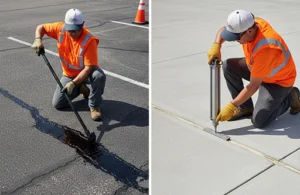
Every surface needs routine care. Asphalt benefits from sealcoating on a regular cycle and prompt crack filling. These steps shield the binder from sunlight and prevent water from entering.
Concrete care focuses on joint sealing, surface sealing where needed, and fast crack repair. Spalling or scaling should be addressed early, before freeze-thaw seasons. For both materials, drainage is a significant concern, as standing water can shorten their lifespan.
Durability and Climate Fit
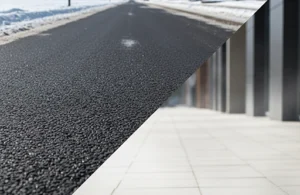
Both surfaces can last for many years with a good base and good care. Asphalt tolerates cold snaps by flexing, though it can soften in extreme heat. Concrete handles heat well, yet it can show cracking or pop-outs in harsh freeze-thaw zones without proper air entrainment and joints.
De-icing salts can be harsh on concrete if it is not sealed and cured properly. Gas and oil drips can stain asphalt and may cause it to soften over time. Match the surface to your weather, traffic, and maintenance habits, and you will get better results.
Safety, Noise, and Ride Quality

Good traction starts with sound design and a clean surface. Fresh asphalt offers a smooth, quiet ride that many drivers like. Concrete reflects more light at night, which can improve visibility to some users.
Here are a few practical reminders:
- Keep surfaces clean to maintain friction, especially at turn lanes and ramps.
- Re-stripe on schedule so drivers see lanes and stalls clearly.
- Fix potholes and trip hazards quickly to limit liability and wear.
The Cost of Asphalt vs Concrete
Upfront price matters, though lifecycle cost tells the full story. In many regions, asphalt costs less to install per square foot than concrete. Concrete often costs more at the start, yet it can go longer between major resurfacing cycles.
Here is a simple way to frame the cost of asphalt vs concrete for planning:
- Installation: Asphalt generally has a lower initial price and faster install. Concrete usually costs more to place and needs curing time.
- Routine Care: Asphalt needs sealcoating and periodic overlays. Concrete needs joint sealing and crack repair, and occasional surface treatments.
- Repairs: Asphalt patches blend well and can be done quickly. Concrete spot repairs can be more visible and may require saw-cutting and panel replacement.
Local labor, material markets, thickness, and base prep move numbers up or down. Ask for bids that specify base depth, lifts or slab thickness, and exact mix types so you can compare apples to apples.
Material Sustainability
Both materials can support greener goals. Asphalt is highly recyclable, and reclaimed asphalt pavement is blended into new mixes. This reduces the need for virgin binder and aggregates.
Concrete can be crushed and reused as base or fill. Supplementary cementitious materials can lower cement content in some mixes. Good design that improves drainage and reduces heavy point loads will extend the life of either surface and reduce waste.
How to Choose for Your Property

Start with what the site needs on a day-to-day basis. If you want fast installation, easy phasing, and quick repairs, asphalt is a strong pick. If you want a rigid surface under dumpsters, at entrances, or where heavy trucks turn tightly, small concrete panels can carry the load.
Think about the people using the space. A retail center may value a quiet ride and fast maintenance windows, which point to asphalt in main areas. An industrial site may value rigid pads and durable joints, which point to concrete in stress points.
Plan the details early. Confirm drainage slopes, base compaction, and edge restraints. Decide where you will place asphalt vs concrete transitions and how you will maintain joints and cracks in the first year. Good prep and early care pay off for decades.
Frequently Asked Questions:
Which lasts longer in general?
With equal design and care, both go the distance. Concrete may go longer without resurfacing, while asphalt wins on faster and cheaper renewals.
What about temperature swings?
Asphalt flexes and handles cold cycles well, while concrete handles heat well. Your local climate and base design should drive the choice.
Can I mix both on one site?
Yes. Many owners lay asphalt in large fields, then place concrete at gates, dumpster pads, steep ramps, and loading docks. That balanced plan controls cost and adds strength where it counts.
Start at the Curb
You do not have to pick one surface for every square foot. Use asphalt where speed and flexibility are crucial, and then use concrete where loads are heavy and edges are prone to chipping. With a clear plan, asphalt vs concrete becomes a practical choice, not a gamble.
Looking to find the right material for your parking lot or driveway? Pothole Repair Carolinas offers expert driveway advice around North and South Carolina. Call us today at 704-227-0468 or contact us online for more information!
Related Articles:
- Leaving Potholes Unfixed? Pothole Damage And Road Risks To Expect
- How To Correct Standing Water Issues
- Is Asphalt Concrete The Best To Use On Pavement?
{ “@context”: “https://schema.org”, “@type”: “BlogPosting”, “headline”: “Asphalt vs Concrete: Uses, Maintenance, And Costs”, “image”: [ “https://www.pothole123.com/wp-content/uploads/2025/10/Asphalt-Vs-Concrete-Uses-Maintenance-And-Costs.webp” ], “datePublished”: “2025-12-03T07:00:00+08:00”, “author”: { “@type”: “Person”, “name”: “The Pothole Repair Carolinas Team” }, “publisher”: { “@type”: “Organization”, “name”: “Pothole Repair Carolinas”, “logo”: { “@type”: “ImageObject”, “url”: “XXX” } }, “description”: “The experts at Pothole Repair Carolinas explain the differences between asphalt vs concrete, including installation, maintenance, costs, and durability.” } { “@context”: “https://schema.org”, “@type”: “FAQPage”, “mainEntity”: [{ “@type”: “Question”, “name”: “What is the main difference between asphalt and concrete?”, “acceptedAnswer”: { “@type”: “Answer”, “text”: “Asphalt combines aggregates with liquid asphalt binder, making it flexible under load and temperature changes. Concrete mixes cement, water, and aggregates into a rigid slab that spreads weight over a larger area.” } }, { “@type”: “Question”, “name”: “Which surface lasts longer, asphalt or concrete?”, “acceptedAnswer”: { “@type”: “Answer”, “text”: “With good design and care, both can last many years. Concrete may go longer without resurfacing, while asphalt is easier and cheaper to renew more often.” } }, { “@type”: “Question”, “name”: “How do asphalt and concrete handle temperature swings?”, “acceptedAnswer”: { “@type”: “Answer”, “text”: “Asphalt flexes and performs well in cold cycles, while concrete holds up better in hot climates. Local climate and base design should guide the choice.” } }, { “@type”: “Question”, “name”: “Which material costs more to install and maintain?”, “acceptedAnswer”: { “@type”: “Answer”, “text”: “Asphalt generally has a lower upfront cost and faster installation. Concrete usually costs more to install but requires fewer major resurfacings over time. Asphalt needs sealcoating and overlays, while concrete needs joint sealing, crack repair, and surface treatments.” } }, { “@type”: “Question”, “name”: “Can asphalt and concrete be used together on one site?”, “acceptedAnswer”: { “@type”: “Answer”, “text”: “Yes. Many owners use asphalt for large drive aisles and parking fields, while placing concrete at dumpster pads, entrances, ramps, and high-stress areas. This hybrid approach balances cost, durability, and performance.” }} ] }