
Roads take a constant beating from traffic, moisture, temperature swings, and shifting soil. Without the right support underneath the pavement, even newly paved surfaces can crack, rut, and develop potholes sooner than expected. That is why geotextile fabric in road construction has become such an important part of modern paving and repair projects.
Geotextile Fabric in Road Construction and Why It Is Used
Geotextile fabric in road construction refers to a permeable textile material installed between soil layers, aggregate, or pavement systems. Its main purpose is to stabilize the ground while helping manage water and soil movement beneath the roadway.
These fabrics are commonly made from synthetic materials such as polypropylene or polyester. They are designed to handle heavy loads while remaining durable in changing weather conditions.
Road construction crews often install geotextile fabric beneath gravel, asphalt, or base layers. Once in place, it helps separate materials, improve load distribution, and support drainage. Without that added support, weaker soils can shift into the aggregate base and reduce the strength of the roadway.
The result is often premature pavement failure. Cracks begin forming, depressions develop, and potholes become more common over time.
How Geotextile Fabric Supports Road Stability

One of the biggest reasons contractors use geotextile fabric is to improve road stability. Roads built over weak or saturated soils face a much higher risk of structural failure.
When heavy traffic repeatedly passes over unstable ground, the base layers start to move. Over time, that movement weakens the pavement surface.
Geotextile fabric helps reduce that issue in several ways:
- It separates soil from aggregate
- It spreads vehicle loads more evenly
- It reduces soil displacement
- It helps maintain base thickness
- It improves drainage below the pavement
By keeping the aggregate base intact, the roadway maintains better structural integrity. That added stability can significantly extend the lifespan of the pavement.
This is especially important in areas that receive frequent rain, freezing temperatures, or heavy commercial traffic.
The Role of Drainage in Pavement Performance
Water is one of the most damaging forces affecting roads and parking lots. Even high-quality asphalt can fail quickly when water infiltrates the base layers.
Poor drainage softens the soil underneath the pavement. Once the subgrade weakens, the surface begins to flex under traffic pressure. Eventually, cracks and potholes form.
Geotextile fabric helps improve drainage by allowing water to pass through while preventing soil migration. This process helps maintain a stronger and drier foundation beneath the road.
In many road construction projects, proper drainage design works together with geotextile materials to create a more stable pavement system. Contractors often combine the fabric with drainage stone, culverts, or edge drains to improve long-term performance.
Without effective drainage, roads often require repairs much sooner than expected.
Types of Geotextile Fabric Used in Road Construction
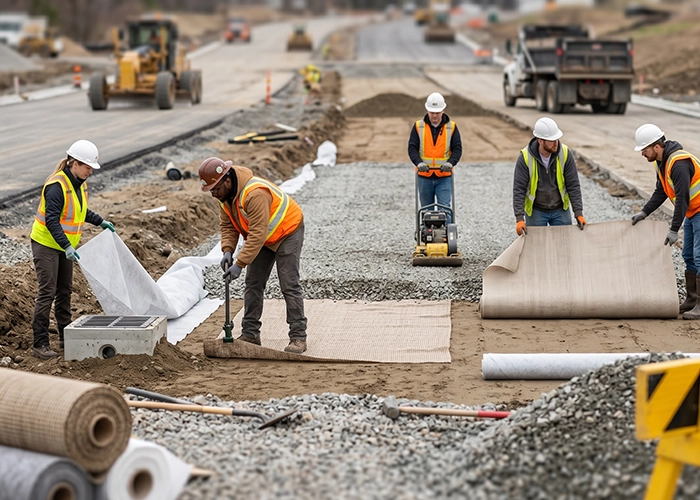
Not all geotextile materials are the same. Different road conditions require different fabric types based on the project goals and soil conditions.
The two main categories include woven and non-woven geotextile fabric.
Woven Geotextile Fabric
Woven geotextile fabric is created by weaving synthetic fibers together. This design provides high tensile strength, making it ideal for stabilization applications.
Contractors commonly use woven fabrics for:
- Road stabilization
- Base reinforcement
- Heavy traffic areas
- Soft soil conditions
Because woven fabric provides strong load support, it is often installed beneath roads carrying commercial vehicles or construction equipment.
Non-Woven Geotextile Fabric
Non-woven geotextile fabric resembles felt and is typically manufactured through heat bonding or needle punching. This type is commonly used when drainage and filtration are the primary goals.
Non-woven fabrics are often used for:
- Drainage systems
- Erosion control
- Pavement overlays
- Water filtration applications
While non-woven fabric may not provide the same tensile strength as woven material, it performs very well in moisture management applications.
Common Applications for Geotextile Fabric
Geotextile fabric is used in far more than highway construction. Many commercial and municipal paving projects rely on these materials to improve pavement durability.
Some common applications include:
- Parking Lots
Commercial parking lots experience continuous vehicle traffic and water exposure. Geotextile fabric helps strengthen the base and reduce settlement issues. - Gravel Roads
Rural roads often develop ruts and washboarding when the gravel mixes with underlying soil. Geotextile fabric helps keep the layers separated. - Roadway Reconstruction
Older roads with failing foundations may require stabilization before resurfacing. Geotextile fabric provides additional support during reconstruction. - Temporary Access Roads
Construction sites frequently use geotextile fabric to stabilize temporary roadways used by heavy equipment. - Drainage Improvements
Roadside drainage systems often include non-woven geotextile materials to support water flow while filtering soil particles.
These applications show how versatile geotextile products can be across different paving environments.
How Geotextile Fabric Helps Reduce Potholes
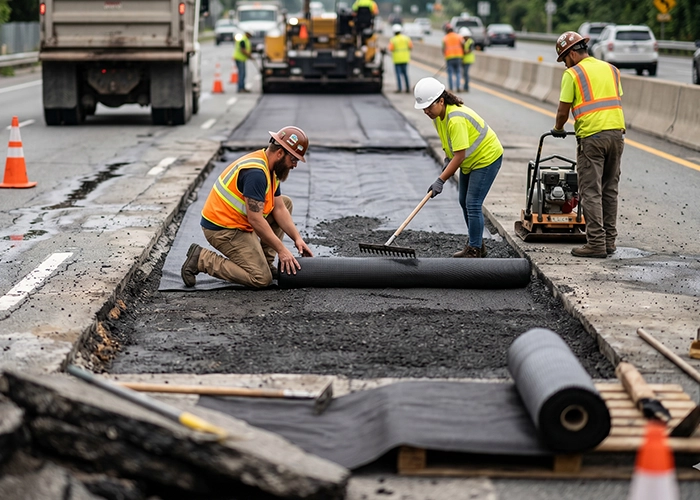
Potholes rarely appear overnight. Most begin with small cracks that allow water to enter the pavement structure.
Once water reaches the base layers, several problems can occur:
- Soil softening
- Aggregate displacement
- Freeze-thaw expansion
- Surface weakening
As vehicles continue driving over the damaged area, the pavement eventually collapses and forms a pothole.
Geotextile fabric helps reduce these risks by strengthening the roadway foundation and improving drainage. When the base layers remain stable, the pavement surface experiences less stress over time.
That does not mean geotextile fabric completely eliminates potholes. However, it can reduce the likelihood of early pavement failure and help roads last longer before major repairs become necessary.
For municipalities and property owners, that often means lower maintenance costs and fewer emergency repairs.
Benefits of Using Geotextile Fabric in Road Construction
Many contractors now consider geotextile fabric a smart long-term investment rather than an optional upgrade.
Some of the biggest benefits include:
Longer Pavement Lifespan
Roads built with proper stabilization often perform better over time. Reduced soil movement helps preserve the pavement structure.
Lower Maintenance Costs
Fewer cracks and potholes typically lead to fewer repairs. This can reduce long-term maintenance expenses for municipalities and commercial property owners.
Improved Load Support
Heavy traffic creates stress beneath the pavement surface. Geotextile fabric helps distribute those loads more evenly.
Better Moisture Control
Drainage plays a major role in pavement performance. Geotextile materials help move water away from vulnerable base layers.
Increased Construction Efficiency
In some cases, geotextile fabric allows contractors to use thinner aggregate layers while maintaining performance standards. This can improve project efficiency and reduce material usage.
Factors Contractors Consider Before Installation

Choosing the right geotextile solution depends on several site-specific conditions. Contractors typically evaluate the project area before selecting the material.
Important factors include:
- Soil strength
- Moisture conditions
- Traffic volume
- Drainage requirements
- Pavement thickness
- Environmental conditions
A roadway carrying heavy truck traffic may require a different stabilization approach than a residential parking area.
Installation quality also matters. Even high-performance materials may fail if they are installed incorrectly or paired with poor drainage design.
That is why experienced paving contractors often conduct soil evaluations and site inspections before beginning construction.
Why Preventive Road Construction Matters
Road repair costs continue rising across the United States. Municipalities, businesses, and property managers all face pressure to maintain safer roads while controlling budgets.
Preventive construction strategies help reduce future repair needs. Geotextile fabric supports that goal by strengthening pavement systems from the ground up.
Instead of waiting for repeated failures, many property owners now invest in better foundational support during the initial construction phase. That proactive approach often delivers better long-term value.
Roads that remain stable longer also improve safety, reduce traffic disruptions, and create a smoother driving experience.
Building Stronger Roads Starts Below the Surface
Drivers usually notice potholes, cracks, and rough pavement long before they think about what caused the damage underneath.
If you’re looking for dependable pavement repair and roadway solutions. Pothole Repair Carolinas can evaluate your surface conditions, recommend the right stabilization methods, and help extend the life of your asphalt investment. Call us at 704-227-0468 or contact us online now to get a free estimate!
Related Articles:
- 3 Top Causes Of Potholes On Asphalt And How To Prevent Them
- Pothole Patching Solutions: What Property Owners Need for Long-Lasting Repairs
- How To Correct Standing Water Issues