
Winter leaves behind more than melting snow and bare trees. It also reveals pavement damage that quietly worsened over several months. Delaying pothole repairs after winter often leads to higher costs, increased safety risks, and faster deterioration of roads and parking areas.
Why Delaying Pothole Repairs After Winter Creates Bigger Problems
Delaying pothole repairs after winter allows minor pavement damage to grow into a much larger issue. During colder months, water seeps into small cracks, freezes, and expands. When temperatures rise, that weakened asphalt collapses under traffic.
What begins as a shallow surface flaw can quickly become a deep pothole. At that point, repairs require more labor, more materials, and more downtime. Early intervention often prevents this escalation.
Winter damage rarely fixes itself. Asphalt continues to degrade as vehicles pass over compromised areas. Waiting until spring schedules open up may feel practical, but it usually increases the overall repair burden.
How Freeze and Thaw Cycles Accelerate Pavement Damage

Freeze and thaw cycles are the primary reason potholes appear after winter. Water enters cracks in the asphalt and freezes overnight. As ice expands, it forces the pavement apart from the inside.
When temperatures rise during the day, the ice melts and leaves behind empty spaces. These voids weaken the pavement structure and reduce its load-bearing strength. Traffic pressure then causes the surface to cave in.
This process repeats dozens of times throughout winter. By the time snow melts, damage is already extensive. Delaying repairs allows spring rain to continue this destructive cycle.
The Financial Impact of Waiting Too Long
The cost difference between early repairs and delayed repairs can be substantial. Small potholes can often be fixed with simple patching. Larger failures may require milling, resurfacing, or full-depth replacement.
Labor costs rise when repairs become more complex. Equipment time increases, and materials are used in greater quantities. What could have been a modest maintenance expense turns into a capital project.
Delaying pothole repairs after winter also affects long-term budgets. Roads that deteriorate faster require earlier resurfacing, which shortens the pavement’s life cycle. Over time, this creates avoidable strain on maintenance funds.
Liability Risks Grow When Repairs Are Postponed
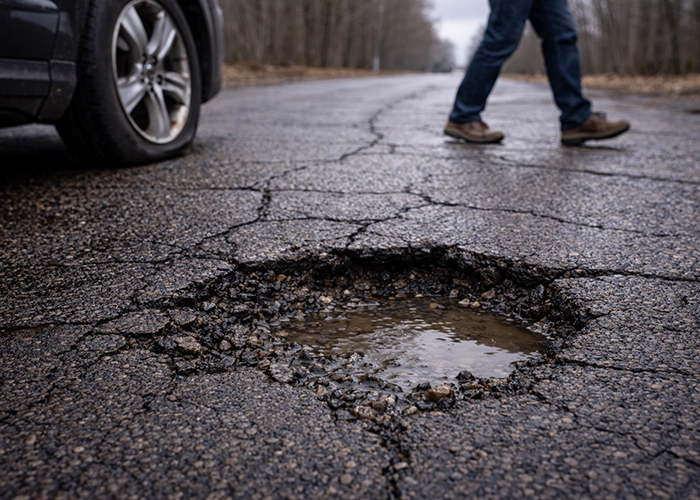
Potholes pose a serious safety risk to drivers and pedestrians. Vehicle damage, trip-and-fall injuries, and accidents become more likely when pavement is uneven. Property owners and municipalities can be held responsible if hazards are ignored.
Courts often look at whether reasonable maintenance was performed. Known damage that goes unrepaired may be seen as negligence. Repair delays can lead to costly claims, settlements, and insurance complications.
Prompt repairs demonstrate a commitment to safety. Addressing potholes early reduces exposure to liability and helps protect both users and property owners.
Vehicle Damage and Community Frustration
Potholes are more than a nuisance for drivers. They cause real damage to tires, wheels, suspension systems, and alignment. These repairs are expensive and frustrating for residents and visitors alike.
When potholes remain unrepaired, complaints tend to increase. Residents may question management priorities or feel their concerns are being ignored. This can strain relationships between property managers, boards, and the community.
Early repairs help maintain trust. Smooth pavement signals that infrastructure is being cared for and that safety is taken seriously.
Parking Lots Suffer Faster Than Roadways
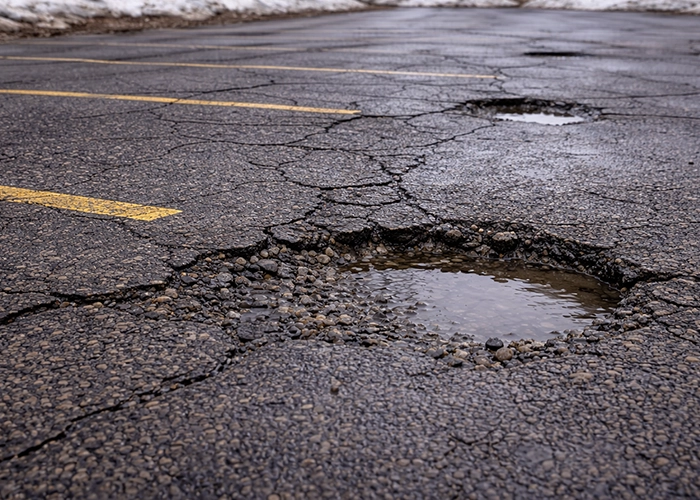
Parking lots are especially vulnerable after winter. They experience frequent stopping, turning, and heavy loads. Snowplows can also scrape and damage the surface during clearing operations.
When pothole repairs are delayed, water pools in damaged areas. This accelerates base failure and leads to widespread cracking. Parking lots then require more extensive repairs than originally needed.
Because parking areas are highly visible, their condition reflects directly on the property. Timely repairs help preserve curb appeal and prevent negative first impressions.
Why Spring Is the Worst Time to Start Planning Repairs
Many property owners wait for spring to begin thinking about pavement maintenance. Unfortunately, this is also when contractors face the highest demand. Schedules fill quickly, and emergency repairs take priority.
Waiting until spring often results in longer wait times and higher costs. Materials and labor may be priced higher during peak season. Temporary fixes may be used when permanent solutions are unavailable.
Addressing potholes as soon as winter ends allows for better planning. Early scheduling provides more flexibility and often results in better workmanship.
Temporary Fixes Can Create False Confidence

Cold patch materials are sometimes used as short-term solutions during winter. While helpful in emergencies, they are not designed to last. These patches often fail once traffic increases and temperatures fluctuate.
Relying on temporary fixes can delay proper repairs. Damage continues beneath the surface, even if the pothole looks filled. By the time failure becomes obvious, the underlying structure may already be compromised.
Permanent repairs performed early help restore pavement integrity. They address both surface damage and the conditions beneath it.
How Delays Shorten Pavement Lifespan
Every pavement surface has a limited lifespan. Preventive maintenance helps extend it, while neglect shortens it dramatically. Potholes allow water to penetrate deeper layers of asphalt and base material.
Once the base is weakened, repairs become more invasive. Surface treatments are no longer effective. Entire sections may need to be rebuilt.
Delaying pothole repairs after winter accelerates this process. Early action helps preserve structural integrity and maximizes return on investment.
Weather Conditions Favor Early Repairs
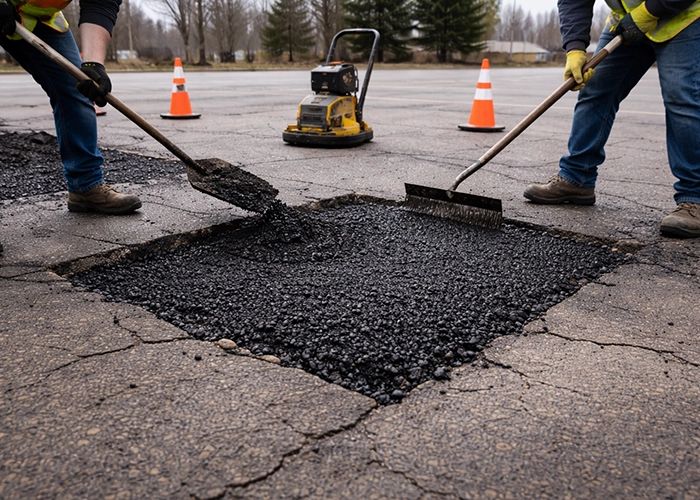
Late winter and early spring often provide ideal conditions for permanent pothole repairs. Temperatures stabilize, moisture levels decrease, and asphalt materials perform better.
Waiting until summer heat can introduce new challenges. Extreme temperatures affect material handling and curing times. Traffic volume also tends to increase, which complicates scheduling.
By acting early, repairs can be completed efficiently and with fewer disruptions. Pavement benefits from timely restoration before peak usage resumes.
Proactive Maintenance Protects Long-Term Budgets
Pothole repairs should be part of a broader maintenance strategy. Addressing damage early allows property owners to plan rather than react. Predictable expenses are easier to manage than emergency repairs.
Proactive maintenance reduces the need for large-scale rehabilitation projects. It spreads costs over time and avoids sudden budget spikes.
Consistent repairs also provide better data for future planning. Pavement conditions can be monitored and addressed before failures become widespread.
What Early Action Says About Property Management
Well-maintained pavement sends a clear message. It shows attention to detail, concern for safety, and respect for residents and visitors. These impressions matter, especially in commercial and residential communities.
Delaying repairs may signal neglect, even when budgets are tight. Visible damage often overshadows other improvements being made.
Early pothole repairs demonstrate professionalism. They reflect a commitment to preserving infrastructure and protecting those who use it.
Choosing the Right Time Makes the Difference
Timing plays a critical role in pavement performance. Repairs completed shortly after winter address damage before it spreads. They also restore drainage patterns that may have been disrupted.
Choosing to act early reduces long-term risk. It limits the extent of repairs needed and helps stabilize the surface before heavier seasonal traffic arrives.
Delaying pothole repairs after winter often feels like a cost-saving decision. In reality, it usually results in higher expenses and more complex problems.
Don’t Wait for Potholes to Get Worse: Repair Early and Save More
Winter damage does not pause while schedules are made. Delaying pothole repairs after winter increases costs, risks safety, and shortens pavement life. Addressing damage early protects infrastructure, budgets, and the people who rely on safe, well-maintained surfaces.
The longer potholes sit, the more they cost. Get ahead of the damage at Pothole Repair Carolinas.
Related Articles: