
Each winter, roads across the United States seem to fall apart almost overnight. What looks like a smooth asphalt surface in the fall can turn into a maze of cracks and potholes by spring. This damage is not random, and understanding how freeze-thaw cycles create potholes helps explain why winter is so hard on asphalt.
How Freeze-Thaw Cycles Create Potholes in Asphalt Pavement
Freeze-thaw cycles create potholes by exploiting asphalt’s weakest points. Even well-built pavement contains tiny cracks and pores that allow moisture to seep below the surface. Once water is trapped inside the pavement structure, winter weather sets the stage for damage.
When temperatures drop below freezing, that trapped water expands. Asphalt is flexible, but it can only stretch so far before stress builds. As temperatures rise again, the ice melts and leaves behind slightly larger gaps. This process repeats throughout winter, slowly weakening the pavement from within.
Over time, the asphalt loses its ability to support traffic loads. Eventually, the surface collapses, forming what drivers recognize as a pothole. The damage often becomes visible only after the worst has already happened beneath the surface.
Why Asphalt Is Vulnerable to Winter Conditions
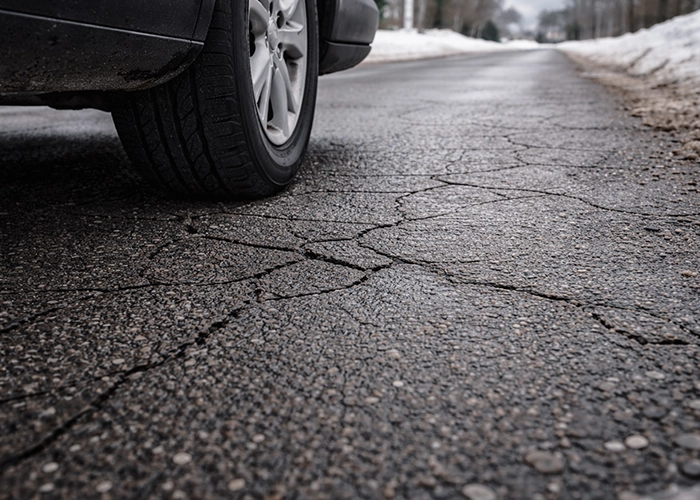
Asphalt is designed to flex under pressure, which is one of its biggest advantages. That flexibility helps roads handle traffic, shifting soil, and mild temperature changes. However, winter pushes asphalt beyond its comfort zone.
Cold temperatures make asphalt stiffer and less forgiving. When vehicles pass over frozen pavement, the material cannot rebound as easily. Stress builds with each passing car, especially in areas with heavy traffic.
Salt and deicing chemicals also play a role. While necessary for safety, these materials can accelerate pavement deterioration by allowing more water to penetrate the surface. Over time, the combined effect weakens the asphalt’s internal structure.
The Role of Water Beneath the Surface
Water is the real troublemaker when it comes to winter potholes. Rain, melting snow, and ice all find ways to work their way into cracks and seams in the pavement. Poor drainage makes the problem even worse.
Once water settles beneath the asphalt, it has nowhere to go. Freeze-thaw cycles cause that water to expand and contract repeatedly. Each cycle loosens the bond between asphalt layers and the underlying base.
Eventually, the base material begins to erode. Without proper support, the asphalt surface above it starts to sag. What began as a small crack can quickly turn into a full-blown pothole.
Temperature Swings and Their Impact on Pavement
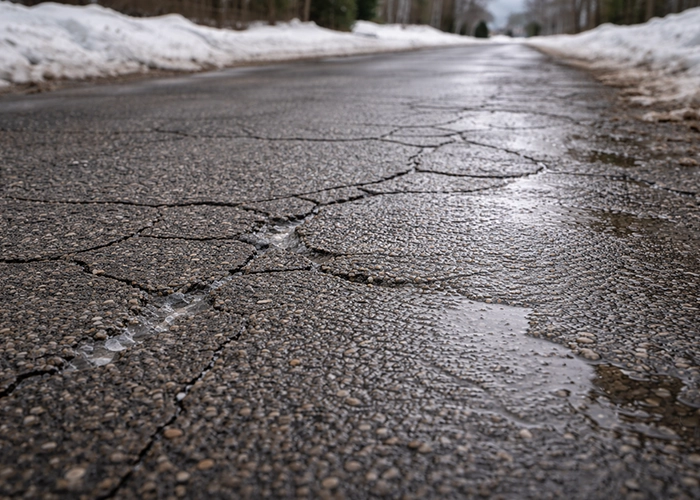
Winter is not just cold. It is unpredictable. Many regions experience frequent temperature swings that move above and below freezing in a single day. These rapid shifts are especially damaging to asphalt.
Each freeze-thaw event acts like a stress test. Pavement expands when moisture freezes and contracts when it melts. Repeated cycles cause fatigue in the asphalt structure.
Areas with milder winters but frequent temperature changes often see just as many potholes as colder regions. It is the repetition, not just the cold, that causes the most damage.
Traffic Load and Pothole Formation
Freeze-thaw damage alone does not create potholes. Traffic plays a major role in turning weakened pavement into visible surface failures. Heavy vehicles apply pressure to already compromised asphalt.
As vehicles pass over softened areas, the asphalt flexes downward. Small pieces may begin to break loose. Over time, these fragments are pushed aside, leaving a hole behind.
High-traffic roads, parking lots, and loading zones are especially vulnerable. The combination of winter moisture and constant weight accelerates pavement failure in these areas.
Why Potholes Appear Suddenly in Late Winter and Early Spring
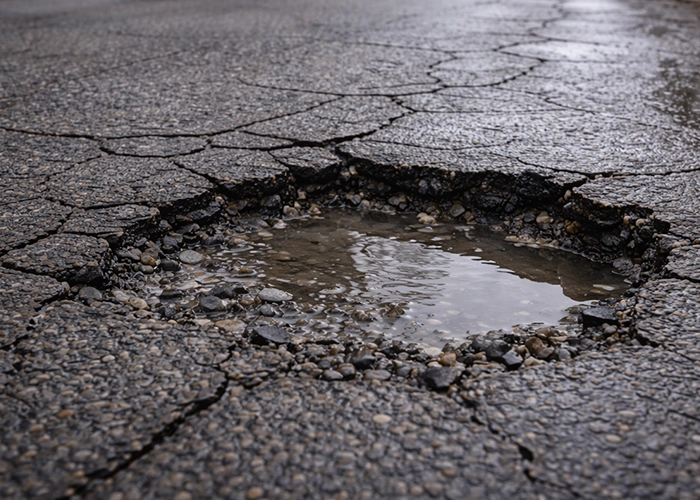
Many people notice that potholes seem to appear overnight toward the end of winter. In reality, the damage has been building for months. Cold weather hides much of the underlying deterioration.
As temperatures rise in late winter or early spring, ice trapped beneath the pavement melts. The asphalt above loses the temporary support that frozen water once provided. Weak spots finally give way under traffic.
This is why pothole complaints spike as winter ends. The surface failures are simply the final stage of a long process that began with the first freeze.
The Difference Between Cracks and Potholes
Cracks are often the earliest warning sign of future potholes. They may look minor, but they create an open door for water to enter the pavement. Left untreated, cracks allow freeze-thaw cycles to do their worst.
Potholes form when cracks grow wider and deeper. Once the asphalt loses structural support, pieces begin to break away. What remains is a hole that continues to expand as traffic passes over it.
Addressing cracks early can significantly reduce pothole formation. Preventive maintenance is far less costly than full repairs after damage has spread.
Why Older Pavement Suffers More in Winter
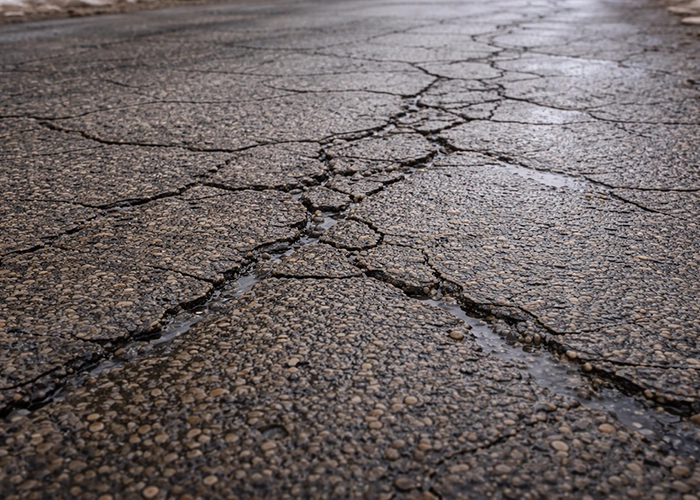
Age matters when it comes to asphalt performance. Older pavement has endured years of traffic, weather, and environmental stress. Over time, asphalt binders oxidize and lose flexibility.
When winter arrives, aged asphalt is less able to handle expansion and contraction. Existing cracks grow faster, and new ones form more easily. Freeze-thaw cycles exploit these weaknesses.
Without regular maintenance, older pavement becomes increasingly vulnerable each winter. What might have been a minor issue years ago can quickly escalate into widespread pothole damage.
The Impact of Poor Drainage on Pothole Development
Drainage is one of the most overlooked factors in pavement longevity. When water is allowed to pool on or beneath asphalt, winter damage accelerates. Freeze-thaw cycles thrive in these conditions.
Poor grading, clogged drains, and uneven surfaces all contribute to standing water. That moisture seeps into cracks and joints, setting the stage for freeze-related expansion.
Improving drainage can dramatically reduce pothole formation. Keeping water away from the pavement structure is one of the most effective long-term strategies.
How Preventive Maintenance Reduces Winter Damage
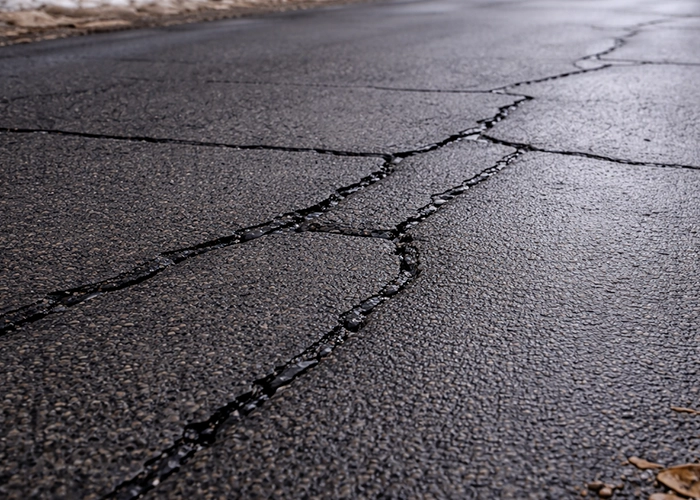
Preventive maintenance focuses on addressing small issues before they grow. Crack sealing, sealcoating, and minor repairs help protect asphalt from moisture intrusion. These steps are especially important before winter arrives.
By sealing cracks, water is kept out of the pavement. This limits the damage caused by freeze-thaw cycles. The asphalt remains stronger and more resilient throughout the cold months.
Regular inspections also help identify problem areas early. Fixing weak spots in the fall can prevent costly repairs in the spring.
Why Timely Pothole Repair Matters
Once a pothole forms, it rarely stays the same size. Traffic and weather continue to break down the surrounding asphalt. What starts as a small hole can quickly expand.
Timely repairs restore the pavement’s structural integrity. They also prevent further water infiltration that leads to additional freeze-thaw damage. Delaying repairs often results in higher costs and more extensive work later.
For property owners and municipalities, prompt pothole repair improves safety and reduces liability. It also extends the life of the surrounding pavement.
Winter Potholes and Vehicle Damage
Potholes are more than a nuisance for drivers. They can cause serious vehicle damage, including tire blowouts, bent rims, and suspension issues. These repairs add up quickly.
During winter, potholes are harder to see. Snow, ice, and standing water can hide their depth. Drivers may not notice them until it is too late.
Maintaining pavement reduces these risks. Smoother surfaces protect vehicles and improve overall driving conditions during harsh weather.
Planning Ahead for the Next Winter Season
Understanding how freeze-thaw cycles create potholes allows property owners to plan more effectively. Waiting until spring to address damage often means reacting rather than preventing. Proactive strategies deliver better results.
Scheduling maintenance before winter can make a significant difference. Addressing cracks, drainage issues, and surface wear prepares asphalt for seasonal stress. The pavement enters winter in stronger condition.
Long-term planning also helps manage budgets. Preventive care is more predictable and less expensive than emergency repairs after widespread damage occurs.
Stop Winter Potholes Before They Start
Winter damage to asphalt is not inevitable, but it is predictable. Freeze-thaw cycles create potholes by allowing water to infiltrate, expand, and weaken pavement over time. With proper maintenance and timely repairs, much of this damage can be reduced, protecting asphalt surfaces and extending their lifespan.
Stop potholes before they start. Schedule a pavement inspection and handle cracks, drainage issues, and minor repairs now to protect your asphalt all winter long.