
Drainage and pothole prevention go hand in hand, yet they are often treated as separate issues. The truth is simple. Water is the leading cause of pavement damage, and without proper drainage, potholes are almost guaranteed to follow.
Understanding how water moves across and beneath your pavement can help you stop problems before they start.
Drainage and Pothole Prevention Starts With Water Control
Water may not seem harmful at first glance, but it is one of the most destructive forces acting on asphalt. When drainage is poor, water begins to collect on the surface or seep below it. Over time, that moisture weakens the structure that holds pavement together.
Asphalt is designed to be durable, but it is not waterproof. Once water penetrates small cracks, it starts breaking down the base layer underneath. That process often goes unnoticed until visible damage appears.
Proper drainage redirects water away from paved areas. When water flows as intended, pavement stays stable, and the risk of potholes drops significantly.
How Poor Drainage Leads to Potholes
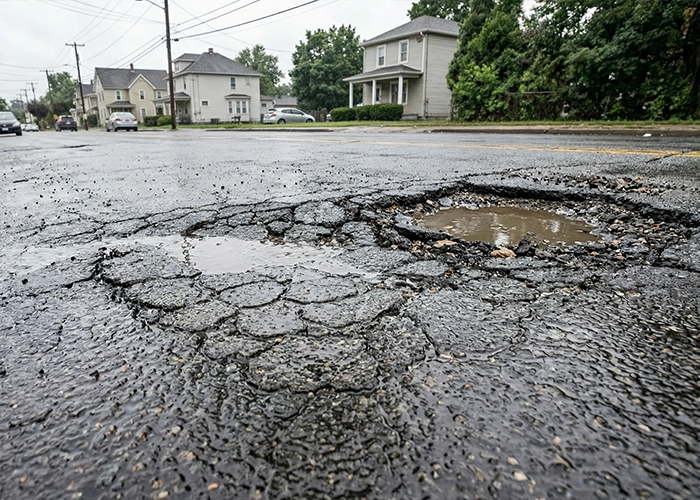
Potholes rarely appear overnight. They form through a gradual process, and drainage problems are usually at the center of it.
When water collects on pavement, it finds its way into small surface cracks. As traffic passes over those weakened areas, pressure pushes the water deeper into the structure. The base begins to soften, and the asphalt above it loses support.
Eventually, the surface collapses under repeated stress. That collapse is what drivers recognize as a pothole.
The cycle tends to accelerate once the damage starts. More water enters the opening, more material breaks apart, and the pothole grows larger with time.
Common Drainage Issues That Cause Pavement Damage
Not all drainage problems are obvious. In many cases, the issue develops slowly due to design flaws or lack of maintenance.
Here are some of the most common causes:
- Improper grading
Pavement should be slightly sloped to allow water to flow off the surface. Flat or uneven areas trap water instead of directing it away. - Clogged drains and catch basins
Leaves, debris, and sediment can block drainage systems. When water has nowhere to go, it pools on the surface. - Damaged curbs and gutters
These structures guide water away from pavement. When they are cracked or broken, water flow becomes unpredictable. - Low spots and depressions
Even small dips can collect water after rain. Over time, these areas become prime locations for pothole formation.
Each of these issues contributes to standing water, which is one of the biggest threats to pavement longevity.
The Role of Subsurface Drainage in Pavement Health
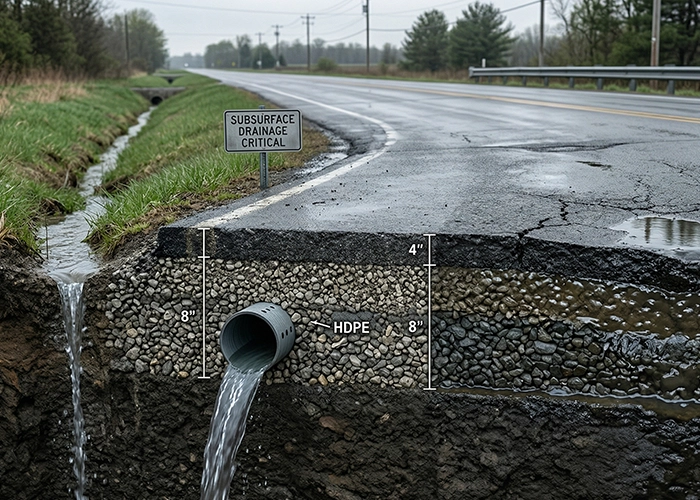
Surface drainage is only part of the equation. What happens below the pavement matters just as much.
Subsurface drainage systems are designed to move water away from the base layer. Without them, moisture can become trapped beneath the asphalt. That trapped water weakens the foundation and reduces the pavement’s ability to support weight.
In colder regions, this issue becomes even more serious due to freeze and thaw cycles. Water expands when it freezes, creating additional stress within the pavement structure.
Even in milder climates, saturated base layers lead to soft spots and eventual surface failure.
Signs Your Property Has a Drainage Problem
Drainage issues are often visible if you know what to look for. Early detection can prevent costly repairs later on.
Watch for these warning signs:
- Standing water after rainfall
If water remains on the surface for hours, drainage is likely inadequate. - Cracking patterns in asphalt
Small cracks may indicate water intrusion below the surface. - Soft or spongy pavement areas
This suggests that the base layer has absorbed moisture. - Recurring potholes in the same location
Repeated damage often points to an underlying drainage issue that has not been addressed.
Ignoring these signs allows the problem to grow, making repairs more complex and expensive over time.
Effective Drainage Solutions for Pothole Prevention
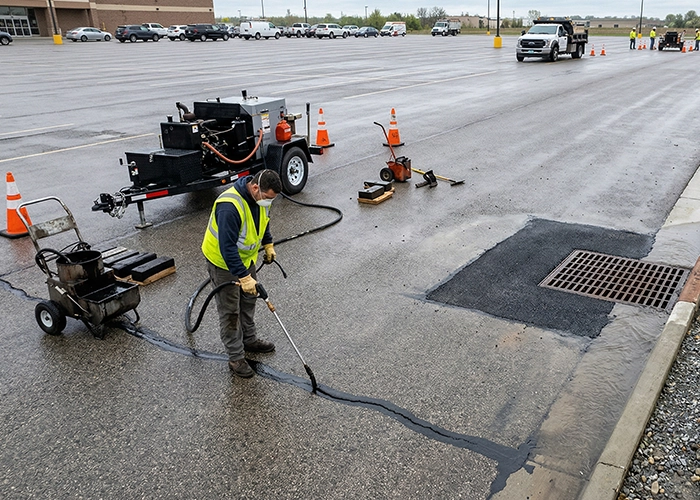
Addressing drainage does not always require a complete overhaul. In many cases, targeted improvements can make a significant difference.
Some of the most effective solutions include:
- Regrading pavement surfaces
Adjusting the slope ensures that water flows away from critical areas. - Installing or repairing catch basins
These systems collect and redirect water, preventing pooling. - Improving gutter and curb systems
Properly functioning edges help guide water off the pavement. - Adding French drains or subsurface systems
These solutions manage water below the surface, protecting the base layer. - Sealcoating and crack sealing
These preventive measures reduce water penetration and extend pavement life.
Each solution should be tailored to the specific conditions of the property. A professional assessment can identify the most effective approach.
Why Preventive Maintenance Matters More Than Repairs
It is easy to focus on fixing potholes after they appear. However, prevention is often more cost-effective and less disruptive.
When drainage is addressed early, the need for major repairs decreases. Pavement lasts longer, and safety risks are reduced.
Preventive maintenance also helps property owners avoid unexpected expenses. Small adjustments made at the right time can prevent larger issues from developing.
In many cases, routine inspections and minor drainage improvements are enough to keep pavement in good condition.
How Public Works Prioritize Pothole Repairs
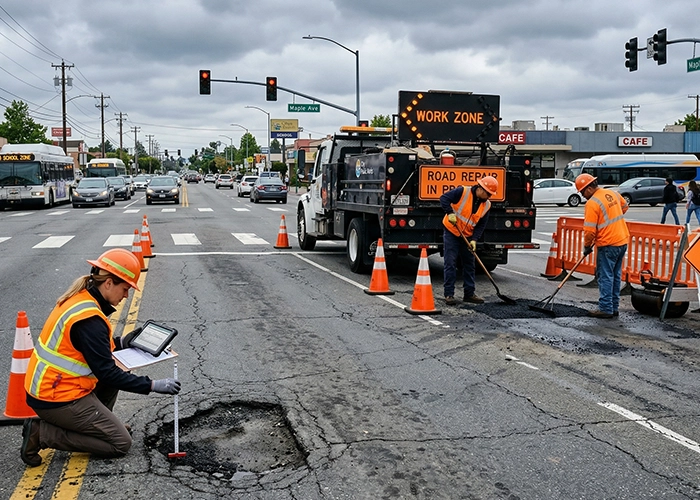
For public roads, pothole repair is typically handled by local public works departments. These teams follow a structured approach to prioritize repairs based on safety and impact.
The process usually includes:
- Severity assessment
Larger and deeper potholes are addressed first, especially those that pose immediate safety risks. - Traffic volume considerations
Roads with higher traffic levels receive priority because they affect more drivers. - Location factors
Potholes near intersections, schools, and emergency routes are often repaired sooner. - Weather conditions
Repairs may be delayed during heavy rain or extreme temperatures, as conditions must be suitable for long-lasting fixes.
Understanding this process helps set realistic expectations for response times.
How Residents Can Report Potholes
Residents play an important role in identifying potholes early. Reporting damage quickly allows crews to respond before conditions worsen.
Here is how the process typically works:
- Locate the exact position of the pothole
Provide clear details, including nearby landmarks or intersections. - Submit a report through the appropriate channel
Most cities offer online forms, mobile apps, or phone hotlines. - Include photos if possible
Visual evidence helps crews assess severity before arriving on-site. - Follow up if needed
If the issue remains unresolved after a reasonable time, a follow-up report may be helpful.
Response times vary by location, but many municipalities aim to address reported potholes within a few days to a few weeks, depending on urgency.
Expected Response Times for Pothole Repairs
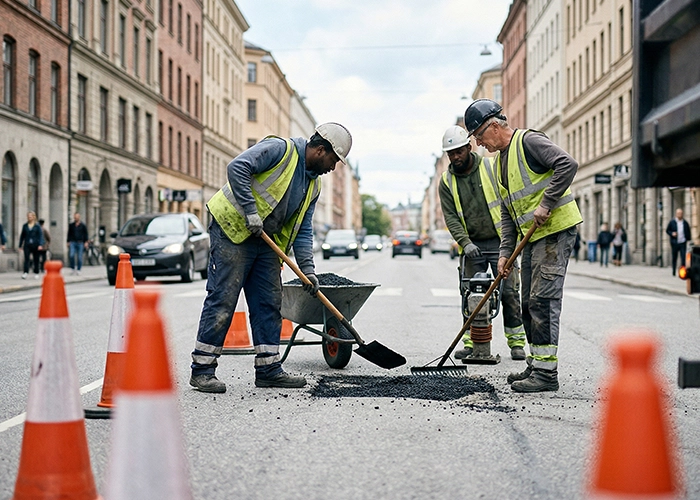
Response times depend on several factors, including weather, workload, and available resources.
In general:
- Emergency hazards may be repaired within 24 to 48 hours
- Moderate issues are often addressed within a few days
- Lower-priority repairs may take one to two weeks or longer
Weather plays a major role. Repairs are more effective in dry conditions, so delays may occur during extended rain.
While waiting for repairs, drivers and property owners should use caution around damaged areas.
Protect Your Pavement Before Problems Start
Potholes rarely form without warning. In most cases, drainage issues are the root cause, and addressing them early can make all the difference.
If your property shows signs of water-related damage, now is the time to act. A professional evaluation can identify hidden issues and provide practical solutions that keep your pavement in top condition.
Need help preventing potholes before they start? Contact Pothole Repair Carolinas today and keep your surfaces safe, smooth, and built to last.
Related Articles